Mold in Garages in Sharpes: What Cocoa Area Property Owners Should Know
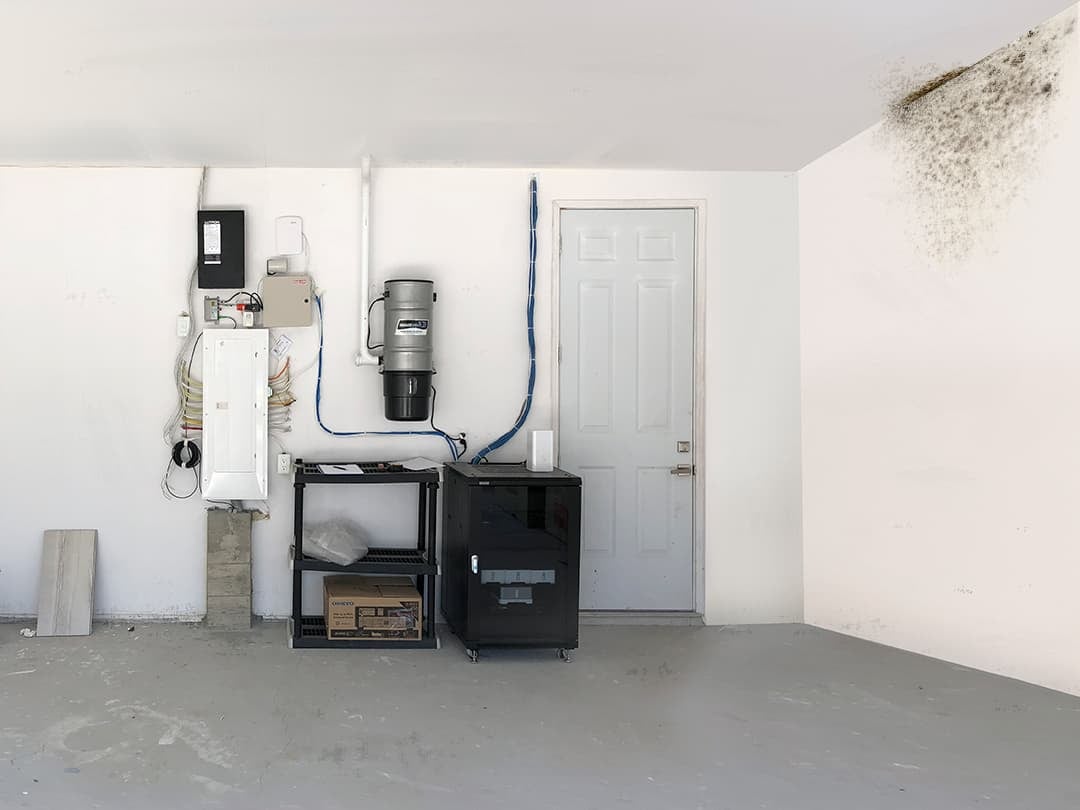
Garages are often treated as “outside but attached” spaces—used for storage, laundry, and parking—but in Sharpes, garages are one of the most overlooked sources of mold problems. Because garages typically have limited ventilation, fluctuating temperatures, and frequent moisture exposure, mold can grow quietly and spread into the rest of the home without drawing much attention.
For Cocoa area property owners, mold in garages is rarely just a cosmetic issue. In Florida’s humid climate, garage mold often signals ongoing moisture problems that can affect indoor air quality, structural materials, and even living spaces connected to the garage. Understanding why garages are vulnerable, where mold grows, and how to prevent it can help owners avoid costly repairs and health concerns.
This guide explains why mold commonly develops in garages in Sharpes, the most frequent moisture sources, warning signs to watch for, and practical steps property owners can take to protect their property.
Why Garages in Sharpes Are Prone to Mold
Garages experience conditions that are ideal for mold growth—especially in Florida.
Key risk factors include:
- High outdoor humidity entering through doors and vents
- Garages not fully air-conditioned
- Temperature swings causing condensation
- Moisture from vehicles after rain
- Limited airflow and ventilation
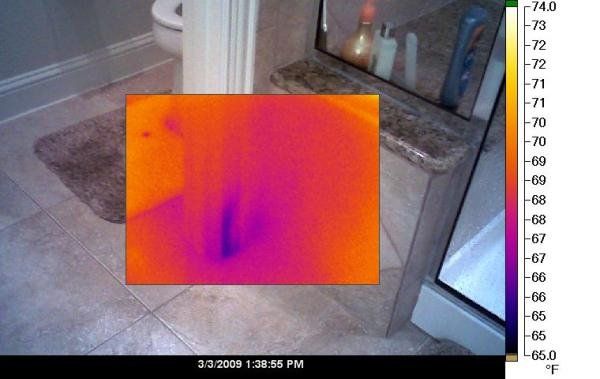
- Concrete slabs wicking moisture from the ground
Because garages are often cooler than the outdoor air—but warmer than indoor spaces—they become prime locations for condensation and trapped moisture.
Concrete Slabs and Moisture Wicking
Most garages sit directly on concrete slabs. Concrete is porous and can pull moisture upward from the soil beneath it.
In Sharpes:
- Frequent rain increases ground moisture
- Warm soil temperatures push moisture upward
- Moisture accumulates near the slab surface
This moisture can feed mold growth along:
- Baseboards
- Drywall edges
- Stored items touching the floor
- Cardboard boxes and wood materials
Vehicles as a Hidden Moisture Source
One of the most overlooked moisture sources in garages is vehicles themselves.
After rain or driving through wet areas:
- Water drips from vehicles onto the garage floor
- Moisture evaporates into the enclosed space
- Humidity rises quickly with the garage door closed
Over time, repeated moisture from vehicles can keep garage humidity high enough for mold to grow—especially when ventilation is poor.
Common Places Mold Grows in Garages
Mold in garages is often hidden behind stored items or along cooler surfaces.
Lower Wall Sections
Moisture wicking from the slab often feeds mold growth at the base of drywall.
Behind Stored Items
Boxes, cabinets, and shelving placed against exterior walls trap moisture and block airflow.
Ceilings and Attic Interfaces
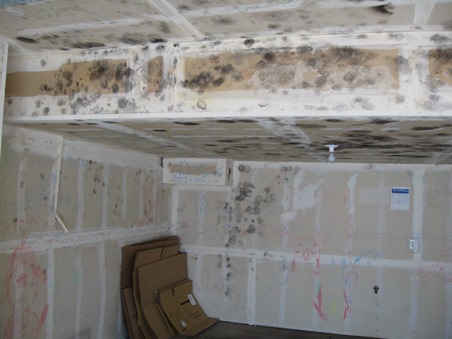
Garages under living spaces or attics can develop mold from condensation or roof leaks.
Around Garage Doors
Poor seals allow rain and humid air to enter, feeding mold growth.
Laundry Areas
Garages with washers, dryers, or utility sinks introduce additional moisture.
Why Garage Mold Often Goes Unnoticed
Garage mold is frequently missed because:
- Garages are not living spaces
- Odors dissipate when doors are open
- Mold hides behind storage
- Damage develops slowly
However, mold in garages can still affect adjacent rooms, especially if the garage shares walls or air pathways with the home.
Early Warning Signs of Mold in Garages
Property owners should watch for:
- Musty or damp odors in the garage
- Odors that worsen after rain
- White, green, or black spots on walls or ceilings
- Peeling or bubbling paint
- Rusting tools or metal items
- Cardboard boxes feeling damp
- Mold returning after cleaning
Odors are often the earliest and most reliable warning sign.
Musty Smells That Spread Indoors
One of the biggest concerns with garage mold is that odors and spores can migrate into the home.
This happens through:
- Shared walls
- Doorways into living spaces
- HVAC duct leaks
- Pressure differences when AC runs
If musty smells are noticeable near the door between the garage and home, garage mold should be investigated immediately.
Health and Air Quality Concerns
While garages aren’t primary living spaces, mold growth there still impacts indoor air quality.
Possible symptoms include:
- Sneezing or nasal congestion
- Persistent coughing
- Headaches or fatigue
- Worsening asthma or allergies
Items stored in garages—such as sports gear, tools, or seasonal decorations—can also carry mold spores into living areas.
Mold After Storms and Flooding
Storms significantly increase garage mold risk in Sharpes.
After heavy rain:
- Water may seep under garage doors
- Ground moisture increases slab wicking
- Humidity spikes in enclosed spaces
Garages that flood—even briefly—are especially prone to mold if not dried within 24–48 hours.
Why Painting or Cleaning Doesn’t Fix Garage Mold
Surface fixes often fail because they don’t address moisture.
Common ineffective approaches include:
- Painting over stains
- Cleaning visible mold only
- Using air fresheners
- Removing moldy items without drying the space
Without controlling humidity and moisture sources, mold almost always returns.
When Garage Mold Becomes a Bigger Problem
Garage mold requires prompt attention when:
- Odors spread into the home
- Mold appears repeatedly
- Walls or ceilings show damage
- The garage is used as living or storage space
- Health symptoms are present
At this point, professional evaluation may be necessary to identify hidden moisture sources.

Preventing Mold in Garages in Sharpes
Improve Ventilation
Open doors periodically, use vents, or add exhaust fans if possible.
Control Humidity
Use a dehumidifier to keep humidity below 55%.
Seal Garage Doors
Ensure weather stripping prevents rain and humid air intrusion.
Elevate Stored Items
Keep boxes and furniture off the floor and away from walls.
Address Slab Moisture
Use moisture barriers or mats where needed.
Dry Wet Areas Immediately
After storms or flooding, dry the garage within 24–48 hours.
Mold in Attached Garages and Home Value
Attached garage mold can affect:
- Indoor air quality
- Home inspections
- Resale value
- Insurance considerations
Buyers and inspectors increasingly view garage mold as a sign of broader moisture problems.
Mold in Garage Rental Properties
For landlords, garage mold presents added risks.
Ignoring issues can lead to:
- Tenant complaints
- Habitability concerns
- Insurance complications
- Legal exposure
Routine inspections and moisture control protect both tenants and property owners.
Final Thoughts for Cocoa Area Property Owners
Mold in garages in Sharpes is common, preventable, and often underestimated. Because garages are not primary living spaces, early warning signs are frequently ignored—allowing mold to spread and moisture problems to worsen.
Property owners who monitor garage humidity, address moisture sources promptly, and take musty odors seriously can prevent small garage mold issues from turning into larger indoor air quality or structural problems. In Florida’s climate, every enclosed space matters—including the garage.
For Cocoa area property owners, proactive garage moisture management is a simple step that pays off in healthier air, lower repair costs, and better long-term property value.