Mold in Florida Winters in Brevard County: What Cocoa Area Property Owners Should Know
When people think about mold in Florida, they usually picture hot, rainy summers—not winter. But in Brevard County, winter is actually a very common time for mold problems to appear, especially in homes that feel dry, comfortable, and problem-free on the surface.
Florida winters don’t eliminate moisture. Instead, they change how moisture behaves indoors, and those changes often catch property owners off guard. For homeowners, landlords, and property managers across Cocoa and the surrounding Brevard County communities, understanding why mold shows up in winter and where it hides is key to preventing recurring problems.
Why Mold Still Grows During Florida Winters
Florida winters are mild, not dry. While temperatures drop slightly, humidity often remains high, especially indoors.
Winter conditions in Brevard County typically include:
- Cool nights and warmer days
- Reduced AC usage
- Closed windows and doors
- Limited airflow
- Lingering moisture from previous seasons
These factors create slow-drying indoor environments, which mold thrives in.
Reduced AC Use Is a Major Winter Mold Trigger
Air conditioning isn’t just for cooling—it’s one of the main ways Florida homes remove moisture from the air.
In winter:
- Many homeowners turn AC off or raise thermostat settings
- Dehumidification drops significantly
- Indoor humidity quietly rises
Even when a home feels comfortable, humidity can remain high enough to support mold growth, especially in enclosed spaces.
Condensation Becomes More Common in Winter
Florida winter weather often causes temperature swings that lead to condensation.
Condensation commonly forms on:
- Windows and sliding glass doors
- Exterior-facing walls
- AC vents and ductwork
- Tile floors and slab surfaces
- Metal plumbing pipes
Condensation that appears overnight and doesn’t fully dry during the day creates ideal mold conditions.
Slab Foundations Hold Moisture Through Winter
Most Brevard County homes are built on concrete slabs, which absorb and release moisture slowly.
During winter:
- Ground moisture remains elevated
- Slabs continue releasing moisture upward
- Flooring traps moisture underneath
- Drying slows due to cooler temperatures
This is why mold under flooring or along baseboards often appears in winter—even if the water source occurred months earlier.
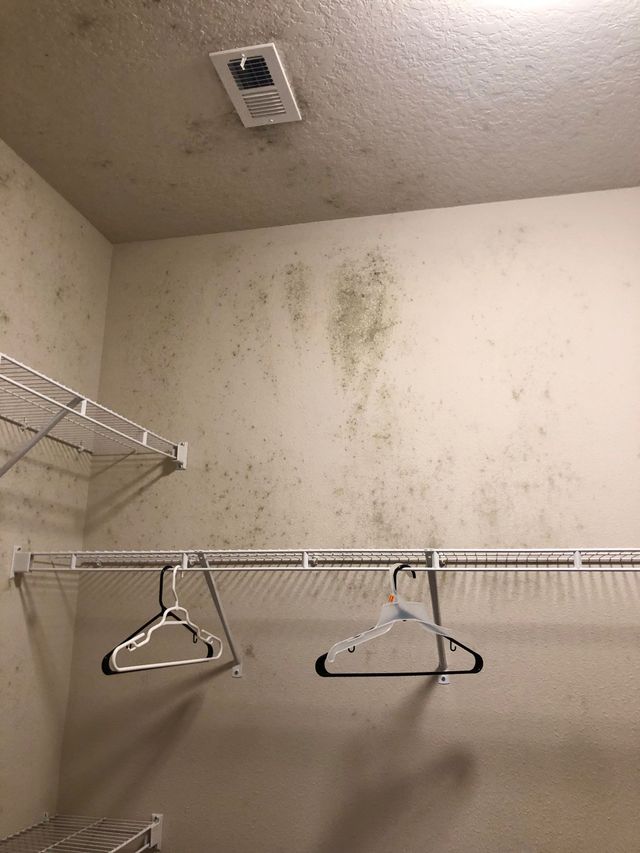
Closets Are the Most Common Winter Mold Location
Closets are ground zero for winter mold in Florida homes.
Why closets are vulnerable:
- Limited airflow
- Cooler exterior walls
- Doors kept closed
- Stored items blocking circulation
In winter, closets often stay cooler and damper than the rest of the home, allowing mold to grow quietly behind clothing and boxes.
Winter Mold Often Appears Without Any Leaks
One of the most confusing aspects of winter mold is that it often shows up without plumbing leaks, roof leaks, or flooding.
Winter mold is commonly caused by:
- Elevated indoor humidity
- Condensation buildup
- Poor airflow
- Moisture trapped from previous seasons
This leads homeowners to believe mold is “coming from nowhere” when it’s actually a moisture-control issue.
Bathrooms and Laundry Rooms Still Matter in Winter
Bathrooms and laundry rooms remain high-risk areas even in cooler months.
Winter mold risks include:
- Steam from showers with fans used less often
- Moisture lingering longer due to cooler air
- Poor ventilation
Ceiling mold, grout discoloration, and musty smells often appear during winter in these spaces.
HVAC Systems Can Contribute to Winter Mold
HVAC systems behave differently in winter.
Common winter HVAC issues include:
- Short cycling that reduces dehumidification
- Condensation forming when systems do run
- Moisture in drain pans or ducts
Because systems run less often, moisture may not be removed effectively.
Why Mold Odors Are Common in Winter
Musty odors are one of the first winter mold warning signs.
Odors usually indicate:
- Hidden mold growth
- Moisture trapped behind walls or floors
- Closet or HVAC-related humidity issues
Winter odors are often stronger because homes are closed up with less fresh airflow.
DIY Cleaning Doesn’t Stop Winter Mold
Wiping visible mold doesn’t address the cause.
DIY cleaning fails in winter because:
- Humidity remains uncontrolled
- Condensation continues forming
- Hidden mold is missed
- Growth returns quickly
Winter mold almost always comes back unless moisture and airflow are addressed.
Mold Testing in Winter: When It Helps
Mold testing can be useful when:
- Odors persist without visible mold
- Multiple rooms show winter symptoms
- HVAC involvement is suspected
- Documentation is needed
Testing supports evaluation—but moisture control solves the problem.
How Winter Mold Affects Property Value
Winter mold often shows up during:
- Home inspections
- Holiday visits
- Seasonal occupancy changes
Unresolved winter mold can:
- Raise buyer concerns
- Delay sales
- Create tenant complaints
- Reduce perceived property value
Homes with documented moisture control maintain value far better.
Preventing Mold During Florida Winters
Winter mold prevention focuses on consistency.
Effective steps include:
- Keeping indoor humidity below ~55%
- Running AC periodically, even in winter
- Using dehumidifiers in problem areas
- Improving airflow in closets and storage spaces
- Using bathroom exhaust fans consistently
- Monitoring condensation on windows and vents
Small adjustments prevent seasonal mold from taking hold.
Why Local Brevard County Experience Matters
Florida winter mold behaves very differently than mold in cold climates. Brevard County homes deal with slab foundations, humidity retention, condensation cycles, and reduced AC use that drive winter mold growth.
Professionals familiar with local conditions understand why mold shows up in winter and how to stop it effectively. Cocoa Mold Removal brings this Brevard County experience, helping property owners prevent recurring winter mold instead of cleaning it every year.
A Practical Takeaway for Property Owners
Florida winters don’t stop mold—they change it. Mold in Brevard County winters is usually driven by reduced dehumidification, condensation, and trapped moisture, not leaks or flooding.
By maintaining humidity control year-round, watching for condensation, improving airflow, and responding early to odors or dampness, property owners can prevent winter mold before it spreads. In Florida, mold prevention is a 12-month responsibility—even in winter.
Relevant Images for This Article