Mold in Bathrooms in Brevard County: What Cocoa Area Property Owners Should Know
Bathrooms are one of the most common places mold shows up in Brevard County homes—and for good reason. These spaces combine daily water use, warm temperatures, and limited airflow, all inside a climate where humidity is already high most of the year. For homeowners in Cocoa, Cocoa Beach, West Cocoa, Port St. John, Sharpes, and Canaveral Groves, bathroom mold is less about cleanliness and more about how moisture behaves inside the home.
Many property owners notice mold starting on a ceiling, creeping along grout lines, or returning again and again despite regular cleaning. That repetition is the key signal that something deeper is happening. In Florida, bathroom mold almost always points to moisture that isn’t being removed quickly enough—or is being trapped where you can’t see it.
This article explains why bathrooms are such a mold hotspot in Brevard County, where mold typically develops, why surface cleaning often doesn’t solve the issue, and what property owners should understand to prevent bathroom mold from becoming a recurring problem.
Why Bathrooms Are High-Risk Areas for Mold in Brevard County
Bathrooms create ideal conditions for mold every single day.
Local factors that increase bathroom mold risk include:
- High year-round humidity
- Frequent hot showers and baths
- Steam that condenses on cool surfaces
- Exhaust fans that are underpowered or unused
- Poor airflow in enclosed spaces
In Brevard County’s climate, moisture doesn’t evaporate quickly. Instead, it lingers—especially on ceilings, walls, and inside materials that don’t fully dry between uses.
Bathroom Mold Is a Moisture Problem, Not a Cleaning Problem
One of the biggest misconceptions homeowners have is that bathroom mold means the bathroom isn’t being cleaned well enough.
In reality:
- Mold feeds on moisture, not dirt
- Clean bathrooms can still grow mold
- Regular scrubbing doesn’t remove moisture from materials
- Mold often grows behind surfaces, not just on them
If mold keeps returning after cleaning, the issue is moisture retention—not surface residue.
Common Places Mold Develops in Bathrooms
Bathroom mold doesn’t always show up in the same places. Where it appears often depends on airflow, surface temperature, and how moisture moves through the space.
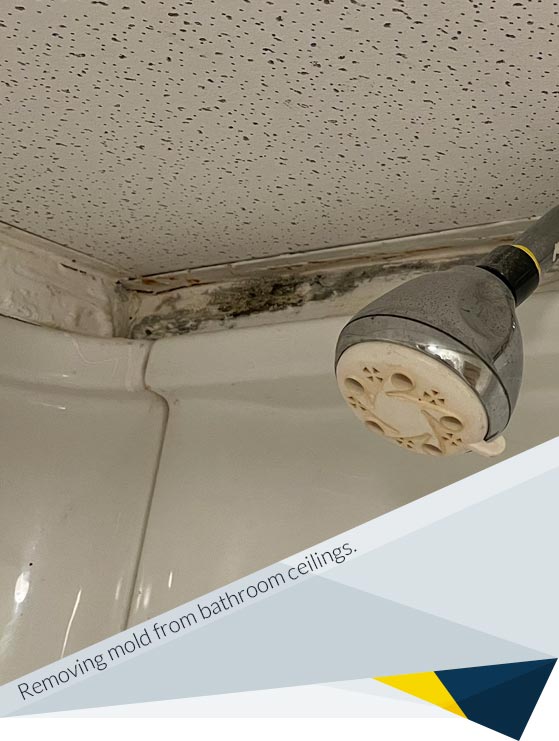
Bathroom Ceilings
Ceilings are one of the most common mold locations.
Mold forms because:
- Steam rises and condenses overhead
- Warm air meets cooler ceiling surfaces
- Exhaust fans don’t remove moisture fast enough
Ceiling mold is especially common in homes with flat ceilings and limited attic ventilation.
Around Exhaust Fans
Exhaust fans are meant to remove moisture—but they’re often part of the problem.
Mold may develop:
- On the fan grille
- Around the fan housing
- In the ceiling cavity above the fan
This happens when fans are undersized, rarely used, or vented improperly.
Shower and Tub Areas
Showers introduce large amounts of moisture in short periods.
Mold commonly appears:
- On grout and caulk lines
- Along shower ceilings
- In corners where airflow is limited
Even with regular cleaning, moisture can remain trapped in porous grout and surrounding materials.
Behind Bathroom Walls
Hidden mold is extremely common in bathrooms.
It often develops:
- Behind shower walls
- Around plumbing penetrations
- Inside wall cavities where condensation occurs
This mold may not be visible until staining, odors, or recurring surface growth appears.
Under Vanities and Sinks
Bathroom vanities hide plumbing and trap moisture.
Mold may form:
- From slow leaks
- From condensation on cold pipes
- From damp cabinet materials
These areas are often overlooked until mold odors become noticeable.
Why Bathroom Mold Is So Persistent in Florida Homes
Bathroom mold in Brevard County tends to come back because the conditions that caused it never change.
Common reasons include:
- Exhaust fans not used long enough
- Fans that don’t move enough air
- Doors kept closed after showers
- Indoor humidity already elevated
- Moisture trapped in drywall, insulation, or framing
Without correcting airflow and drying time, mold growth continues.
Exhaust Fans: A Major Factor in Bathroom Mold
Bathroom exhaust fans play a critical role—but many are ineffective.
Common fan-related issues include:
- Fans that are too small for the bathroom size
- Fans that vent into attics instead of outside
- Fans that are noisy and rarely used
- Fans turned off immediately after showers
In Brevard County, moisture often needs 20–30 minutes of ventilation after a shower to fully clear.
The Role of Attics in Bathroom Mold Problems
Bathroom mold isn’t always caused by the bathroom alone.
In many homes:
- Bathroom ceilings connect directly to humid attics
- Poor attic ventilation allows moisture buildup
- Warm, moist air migrates upward after showers
This combination can cause mold on ceilings even when exhaust fans are used.
Slab Foundations and Bathroom Mold Near Floors
Most Brevard County homes are built on slab foundations, which influence moisture behavior.
Slabs can:
- Absorb moisture from saturated soil
- Release moisture slowly into the home
- Increase humidity near lower walls and floors
Mold near baseboards or behind bathroom walls is often tied to slab-related moisture rather than plumbing leaks.
Why Bleach and DIY Cleaning Rarely Fix Bathroom Mold
Bleach is one of the most commonly used products—but it’s often ineffective long-term.
DIY cleaning fails because:
- Bleach doesn’t penetrate porous materials
- Mold roots remain inside drywall and grout
- Moisture conditions remain unchanged
- Hidden mold continues growing
Cleaning improves appearance temporarily, but mold often returns in the same spots.
When Bathroom Mold Signals a Bigger Issue
Some bathroom mold problems are minor. Others point to larger moisture concerns.
Bathroom mold may signal:
- Ongoing humidity issues throughout the home
- HVAC systems not dehumidifying properly
- Attic ventilation problems
- Hidden plumbing leaks
- Poor airflow in multiple rooms
Recurring bathroom mold is often one symptom of a broader moisture pattern.
How Bathroom Mold Is Properly Addressed
Effective bathroom mold resolution focuses on both removal and prevention.
Proper steps often include:
- Identifying moisture sources
- Improving ventilation and airflow
- Addressing hidden moisture behind surfaces
- Removing mold-affected materials when necessary
- Stabilizing indoor humidity
The goal is to make the bathroom a place where moisture cannot linger long enough for mold to grow.
Preventing Bathroom Mold in Brevard County Homes
Prevention is far more effective than repeated cleanup.
Helpful prevention steps include:
- Running exhaust fans during and after showers
- Leaving bathroom doors open after use
- Keeping indoor humidity below 55%
- Cleaning and maintaining exhaust fans
- Ensuring fans vent outdoors, not into attics
- Monitoring ceilings and corners regularly
In Florida, prevention must be consistent—not occasional.
Why Local Experience Matters
Bathroom mold behaves differently in Brevard County than in drier climates.
Local professionals understand:
- Florida humidity cycles
- How steam behaves in coastal and inland homes
- Common construction styles in Cocoa-area communities
- How slab foundations and attics affect moisture
Many property owners rely on experienced local providers like Cocoa Mold Removal because effective solutions must account for Florida’s unique moisture environment.
Bathroom Mold and Property Value
Recurring bathroom mold can affect:
- Buyer confidence
- Inspection results
- Perceived maintenance quality
Properly addressing bathroom mold—and documenting the work—helps protect long-term property value.
Monitoring After Mold Is Addressed
Once bathroom mold is resolved, monitoring matters.
Property owners should:
- Watch for returning odors
- Inspect ceilings and corners periodically
- Monitor humidity levels
- Ensure ventilation habits stay consistent
Bathroom mold problems usually return slowly—early detection makes a big difference.
A Practical Takeaway for Property Owners
Bathroom mold in Brevard County is extremely common—but it’s also manageable when approached correctly. Mold doesn’t grow because a bathroom isn’t clean; it grows because moisture stays too long in a space designed to get wet every day.
Property owners who focus on ventilation, humidity control, and early detection are far more successful at keeping bathrooms mold-free long-term. In Cocoa and throughout Brevard County, the key isn’t scrubbing harder—it’s helping moisture leave the bathroom before mold has a chance to take hold.