How Mold Spreads Indoors in Brevard County: What Cocoa Area Property Owners Should Know
One of the biggest misconceptions about mold is that it stays in one place. Many property owners in Brevard County believe that if mold appears on a wall, cleaning that spot solves the problem. In reality, indoor mold almost never stays isolated. Once mold begins growing, it can spread quietly throughout a home, often long before visible signs appear.
In Cocoa, Cocoa Beach, West Cocoa, Port St. John, Sharpes, and Canaveral Groves, Florida’s climate plays a major role in how mold spreads indoors. High humidity, frequent rain, warm temperatures, slab foundations, and constant air conditioning create conditions where mold spores move easily through air, walls, flooring, and HVAC systems. Understanding how this spread happens helps property owners catch problems early and avoid repeated mold issues.
This article explains the main ways mold spreads inside Brevard County homes, why Florida conditions accelerate that spread, where mold commonly travels, and what property owners should know to limit its movement.
Mold Spores Are Always Present Indoors
Mold spreads through microscopic spores that are always present in indoor and outdoor air.
In Brevard County:
- Outdoor air contains mold spores year-round
- Opening doors and windows brings spores inside
- Spores settle on surfaces throughout the home
Mold doesn’t become a problem until spores land on damp materials. Once that happens, growth can begin and new spores are released into the air, continuing the cycle.
Air Movement Is the Primary Way Mold Spreads
Airflow is the most common method of indoor mold spread.
Mold spores move through:
- Natural air circulation
- Fans and ceiling fans
- HVAC systems
- Pressure differences between rooms
When spores become airborne, they don’t stay confined to the original source area. They travel wherever air moves.
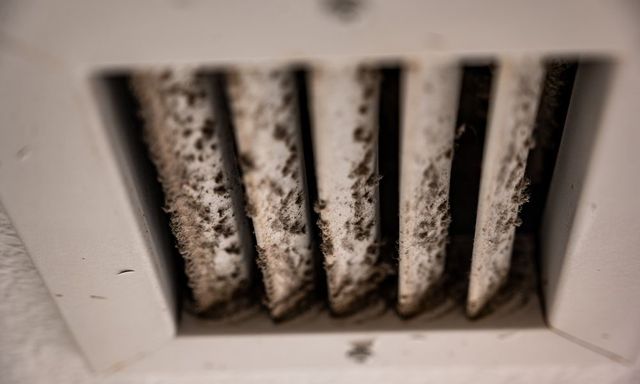
HVAC Systems and Mold Spread
HVAC systems are one of the most effective ways mold spreads indoors.
In Florida homes:
- Air handlers run most of the year
- Ductwork connects every room
- Moisture and condensation are common
If mold develops near an air handler, inside ductwork, or around vents, spores can be distributed throughout the home each time the system runs. This is why odors often become stronger when the AC is on.
Humidity Makes Mold Spread Faster
Humidity doesn’t just help mold grow—it helps mold spread.
When indoor humidity stays high:
- Spores remain viable longer
- More surfaces stay damp
- Mold can establish in new areas quickly
In Brevard County, indoor humidity often rises above 60% during summer, rainy season, and after storms, creating ideal conditions for mold to spread beyond its original location.
Mold Moves Through Wall Cavities
Walls are not solid barriers to mold spread.
Inside walls:
- Air moves through gaps and penetrations
- Moisture travels along framing
- Mold can grow unseen
Once mold develops inside a wall cavity, spores can migrate to adjacent rooms, upper floors, or closets without visible signs.
Flooring Allows Hidden Mold Spread
Flooring systems are another common pathway.
Mold can spread:
- Under tile, laminate, or vinyl
- Beneath carpet padding
- Along slab foundations
In slab homes common throughout Cocoa and surrounding areas, moisture under flooring allows mold to spread horizontally before symptoms appear along baseboards or in nearby rooms.
Slab Foundations and Moisture Migration
Slab foundations play a major role in indoor mold spread.
When soil stays wet:
- Moisture moves upward through the slab
- Flooring materials absorb moisture
- Humidity increases near the floor
This creates connected damp zones where mold can move from one room to another beneath finished flooring.
Attics and Vertical Mold Spread
Mold doesn’t just spread sideways—it also spreads vertically.
Attics contribute by:
- Trapping heat and moisture
- Pulling air upward from living spaces
- Allowing spores to move between floors
Mold growth in an attic can affect the entire home through air movement and pressure differences.
Closets and Low-Airflow Areas
Mold often spreads into closets before being noticed elsewhere.
Closets:
- Have limited airflow
- Often sit on exterior walls
- Trap humidity
Once spores enter these spaces, mold can establish quickly and then spread odors and spores back into bedrooms and living areas.
Bathrooms and Laundry Rooms as Spread Points
Rooms that generate moisture daily often become secondary spread zones.
Bathrooms and laundry rooms:
- Produce steam and condensation
- Rely on ventilation to dry
- Often stay humid longer in Florida
Mold that begins in one of these rooms can spread through air movement into adjacent spaces.
Why Mold Odors Travel Through the Home
Odors are often the first sign of mold spread.
Mold odors:
- Travel with airflow
- Move through wall cavities
- Spread through HVAC systems
If odors appear in rooms without visible mold, it often means mold is spreading from a hidden location.
How Cleaning Can Accidentally Spread Mold
Improper cleaning can increase mold spread.
This happens when:
- Mold is scrubbed without containment
- Spores become airborne
- Wet cleaning leaves surfaces damp
Instead of eliminating mold, cleaning without moisture control often spreads spores to new areas.
Why Mold Appears in Multiple Rooms
When mold shows up in more than one room, it’s rarely coincidence.
Multiple-room mold usually means:
- Airborne spread through HVAC
- Moisture affecting multiple areas
- Hidden growth connecting spaces
This is common in Brevard County homes where humidity and airflow link rooms together.
Seasonal Factors That Increase Mold Spread
Certain times of year make mold spread more aggressively.
These include:
- Summer heat and humidity
- Rainy season moisture
- Post-storm conditions
- Extended AC use
During these periods, mold can spread faster even if no new leaks occur.
Why Mold Keeps Returning in the Same Home
Recurring mold is often the result of spread, not new growth.
This happens when:
- Hidden mold remains active
- Moisture sources aren’t corrected
- Spores continue circulating
Without addressing how mold spreads, cleaning one area doesn’t stop future problems.
When Mold Testing Helps Identify Spread
Testing can help confirm whether mold is spreading indoors.
Testing may help when:
- Odors appear in multiple rooms
- Mold keeps returning
- No visible source is found
- HVAC involvement is suspected
Testing works best when combined with moisture inspection.
Why Local Conditions Matter in Brevard County
Mold spread behaves differently in Florida than in drier climates.
Local factors include:
- Constant outdoor spore presence
- High baseline humidity
- Slab construction
- Coastal and inland moisture patterns
Many property owners rely on experienced local providers like Cocoa Mold Removal because understanding Brevard County conditions is critical when evaluating how mold spreads indoors.
Preventing Mold From Spreading Indoors
Preventing spread focuses on controlling conditions, not just cleaning.
Helpful steps include:
- Keeping indoor humidity below 55%
- Running AC consistently
- Addressing leaks immediately
- Improving airflow in closed spaces
- Avoiding surface cleaning without drying
Stopping moisture stops spread.
Why Early Detection Matters
The earlier mold is addressed, the less it spreads.
Early detection:
- Limits affected areas
- Reduces repair needs
- Prevents recurring problems
Waiting allows mold more time to travel.
A Practical Takeaway for Property Owners
In Brevard County, mold spreads indoors through airflow, moisture, building materials, and HVAC systems—not just from one visible spot to another. Florida’s humidity, slab foundations, and constant air conditioning make it easy for mold spores to move throughout a home quietly, often long before visible signs appear.
Property owners who understand how mold spreads are better equipped to stop it early by focusing on humidity control, moisture correction, and proper evaluation. In Cocoa and throughout the Cocoa area, preventing mold isn’t just about cleaning—it’s about breaking the conditions that allow mold to move and grow in the first place.