Mold Prevention After Storms in Port St. John: What Cocoa Area Property Owners Should Know
Storms are a regular part of life in Port St. John. Heavy rain, strong winds, and sudden pressure changes can all affect how moisture moves through a home—even when there’s no obvious flooding. Many property owners breathe a sigh of relief once the storm passes, only to discover musty odors or mold weeks later. In Florida’s climate, post-storm mold prevention is less about dramatic damage and more about what stays damp after the skies clear.
For homeowners, landlords, and property managers in Port St. John and nearby Cocoa-area communities, understanding how storms introduce and trap moisture is the key to preventing mold. The most effective prevention steps happen immediately after a storm, not when mold becomes visible.
Why Post-Storm Mold Is Common in Port St. John
Port St. John homes face environmental conditions that make post-storm moisture hard to eliminate.
High humidity after storms
Outdoor humidity often remains elevated for days, slowing indoor drying.
Wind-driven rain
Rain can enter around windows, doors, roof edges, vents, and siding—even without visible leaks.
Warm temperatures
Heat accelerates mold growth once moisture is present.
Slab foundations
Saturated soil increases moisture vapor movement into the home.
Year-round AC use
Air conditioning cools surfaces, which can increase condensation after storms.
Because of these factors, moisture introduced during a storm can linger long enough to support mold growth if not addressed quickly.
How Storm Moisture Gets Inside Without Flooding
Many mold problems after storms occur without standing water.
Common moisture pathways include:
- Minor roof or flashing leaks
- Wind-driven rain around windows and doors
- Moisture entering attic vents
- Water intrusion around exterior wall penetrations
- Increased ground moisture near slab foundations
- Condensation caused by sudden temperature changes
These issues often leave materials damp but not visibly wet—making them easy to miss.
The Critical First 24–48 Hours After a Storm
The first two days after a storm are the most important for mold prevention.
During this window:
- Wet materials are easiest to dry
- Moisture hasn’t had time to spread deeply
- Mold growth hasn’t fully established
Waiting longer allows moisture to move into wall cavities, insulation, and flooring—where it becomes much harder to remove.
Start With a Visual Walk-Through
After a storm, a careful inspection can catch problems early.
Check for:
- Ceiling stains or discoloration
- Damp spots on walls, especially near windows
- Soft drywall or bubbling paint
- Water around door thresholds
- Moisture in closets on exterior walls
- Wet insulation visible in accessible attic areas
Even small changes can indicate hidden moisture.
Pay Close Attention to Musty Odors
A musty or earthy smell after a storm is often the first sign that moisture remains inside the home.
These odors may:
- Appear a day or two after the storm
- Be strongest in the morning
- Worsen when the AC runs
- Linger in closets, hallways, or spare rooms
Odors usually mean moisture is present—even if no mold is visible yet.
Attics: A Major Post-Storm Mold Risk
Attics are especially vulnerable after storms.
Common attic moisture issues include:
- Wind-driven rain entering roof vents
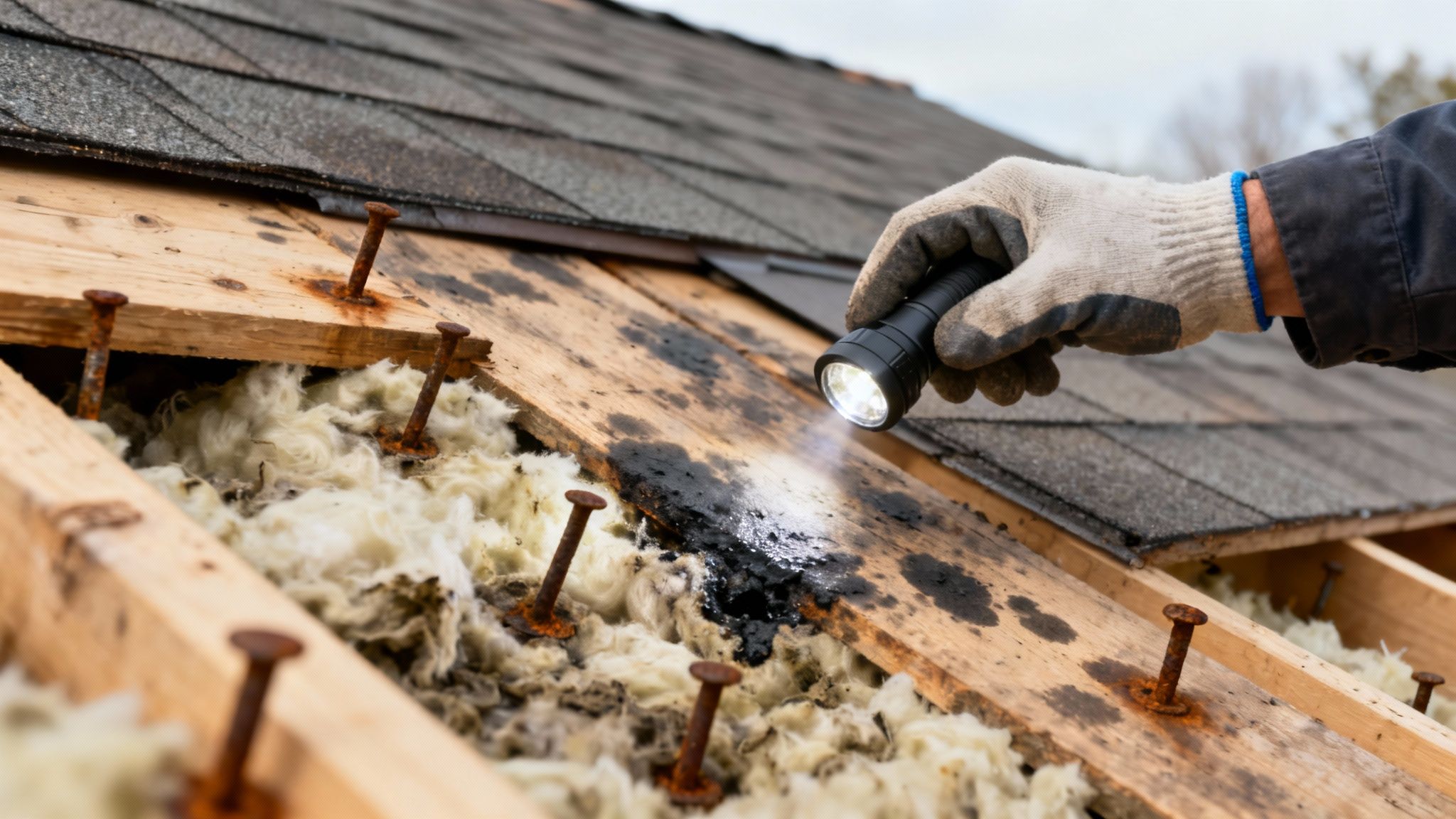
- Wet insulation holding moisture against decking
- Poor ventilation trapping humid air
- Bathroom fans venting into the attic
Mold on attic decking often develops quietly and isn’t noticed until odors or ceiling damage appear.
Walls and Ceilings Can Trap Storm Moisture
Storm moisture doesn’t always drip straight down—it can spread sideways and downward through building materials.
Watch for:
- Bubbling or peeling paint
- Hairline cracks that darken over time
- Soft spots near ceiling corners
- Mold appearing weeks after a storm
These signs often point to moisture trapped behind drywall.
Flooring and Slab Moisture After Heavy Rain
Port St. John homes commonly sit on concrete slabs, which behave differently after storms.
Heavy rain can:
- Saturate soil around the foundation
- Increase moisture vapor rising through the slab
- Trap moisture beneath flooring
Warning signs include:
- Musty odors near floor level
- Warped or lifting flooring
- Discoloration along baseboards
Mold under flooring is a common post-storm issue, even without leaks.
HVAC Systems After Storms
HVAC systems work harder after storms and can contribute to moisture problems.
Post-storm HVAC concerns include:
- Excess condensation in air handlers
- Clogged condensate drain lines
- Mold growth in drain pans
- Ductwork sweating due to humidity
If odors appear when the AC runs after a storm, HVAC moisture may be involved.
Why Simply “Letting Things Dry” Often Fails
Many owners assume moisture will dry naturally after a storm. In Florida, that’s rarely true.
Natural drying fails because:
- Outdoor humidity stays high
- Enclosed spaces lack airflow
- Insulation and drywall hold moisture
- Flooring traps dampness underneath
Without active drying and monitoring, mold often develops quietly.
Immediate Mold Prevention Steps After Storms
Practical post-storm actions can significantly reduce mold risk.
Helpful steps include:
- Running AC consistently to control humidity
- Using exhaust fans to move moist air out
- Drying wet areas promptly
- Removing wet rugs, cardboard, or fabrics
- Checking closets and cabinets
- Inspecting attics when safe to do so
- Monitoring indoor humidity levels
Small actions taken early prevent larger problems later.
Why DIY Cleaning Isn’t Enough After Storms
Wiping surfaces or repainting storm-affected areas doesn’t address hidden moisture.
DIY efforts fail because:
- Moisture remains inside walls or floors
- Mold grows behind surfaces
- Humidity continues feeding growth
- HVAC systems redistribute spores
Post-storm mold prevention is about moisture control, not cosmetic fixes.
How Professional Inspections Help After Storms
A professional mold or moisture inspection focuses on finding hidden dampness.
An inspection may include:
- Moisture readings in walls and floors
- Attic and roof-area evaluation
- Indoor humidity measurements
- HVAC system inspection
- Identification of storm-related intrusion points
In Port St. John homes, inspections often reveal moisture that wasn’t visible during routine checks.
Mold Testing After Storm Events
Mold testing isn’t always required, but it can help when:
- Odors persist without visible mold
- Multiple rooms are affected
- HVAC contamination is suspected
- Documentation is needed
Testing is most effective when combined with inspection findings.
Proper Mold Remediation When Prevention Falls Short
If mold does develop, remediation must address both mold and moisture.
A proper approach typically includes:
- Containment to prevent spore spread
- Removal of mold-affected materials
- Cleaning and HEPA air filtration
- Correction of storm-related moisture sources
- Thorough drying and verification
Skipping moisture correction almost guarantees mold will return.
Long-Term Storm-Season Prevention Strategies
Preventing mold after future storms starts before the next one hits.
Helpful long-term steps include:
- Regular roof and flashing inspections
- Maintaining window and door seals
- Ensuring proper attic ventilation
- Keeping gutters and drainage clear
- Monitoring indoor humidity year-round
- Scheduling inspections after severe storms
Preparation reduces post-storm stress and repair costs.
Why Local Port St. John Experience Matters
Storm-related mold behaves differently in Florida than in drier regions. Port St. John homes face challenges tied to humidity, storms, slab construction, and long cooling seasons.
Professionals familiar with Port St. John understand how storms typically affect local homes and where moisture hides afterward. Cocoa Mold Removal brings this local experience, helping property owners identify post-storm mold risks accurately and prevent repeat problems.
A Practical Takeaway for Property Owners
Storms don’t have to lead to mold—but they do require fast, informed action. In Port St. John, moisture introduced during storms often lingers quietly and shows up later as odors or mold growth.
If your property experienced a recent storm, early evaluation and moisture control can make all the difference. Addressing dampness promptly protects your home, reduces repair costs, and keeps small storm issues from turning into long-term mold problems.
Relevant Images for This Article