Mold Inspection Process Explained in Sharpes: What Cocoa Area Property Owners Should Know
For many property owners in Sharpes, the idea of a mold inspection can feel vague or confusing. People often imagine someone simply “looking for mold,” but a proper mold inspection in Brevard County is far more detailed than that. In Florida’s humid climate, mold problems are rarely limited to what’s visible. They’re usually connected to moisture patterns, building design, and airflow issues that require a systematic approach to identify.
In Sharpes, Cocoa, Cocoa Beach, West Cocoa, Port St. John, and Canaveral Groves, homes are exposed to high humidity, heavy rain, warm temperatures, and slab foundations. These conditions allow mold to develop inside walls, attics, floors, and HVAC systems without obvious signs. Understanding how the mold inspection process works helps property owners know what to expect—and why professional inspections often uncover issues that surface checks miss.
This article breaks down the mold inspection process step by step, explains why each part matters, and clarifies how inspections are tailored to homes in Sharpes and the surrounding Cocoa area.
Why Mold Inspections Matter in Sharpes
Mold inspections aren’t just about confirming visible growth. They’re about understanding why mold is present, where moisture is coming from, and whether conditions exist for mold to continue growing.
In Sharpes, inspections are especially important because:
- High humidity can cause mold without leaks
- Slab foundations hide moisture under flooring
- Attics trap heat and moisture
- HVAC systems run most of the year
A proper inspection focuses on conditions, not just symptoms.
Step One: Initial Conversation and History
A mold inspection usually starts before anyone enters the home.
The inspector will typically ask about:
- Past water leaks or flooding
- Roof or plumbing repairs
- Musty odors or air quality concerns
- Areas where mold has been seen before
- How long issues have been occurring
This background helps guide the inspection toward the most likely problem areas.
Step Two: Visual Inspection of Living Areas
The inspection begins with a careful visual assessment of the home’s interior.
This includes checking:
- Walls and ceilings for stains or discoloration
- Baseboards for swelling or mold
- Flooring for warping or soft spots
- Windows and doors for moisture intrusion
In Sharpes homes, inspectors pay close attention to exterior-facing walls, where humidity and wind-driven rain often introduce moisture.
Step Three: Odor Assessment
Odors provide valuable clues during an inspection.
Musty or earthy smells can indicate:
- Hidden mold behind walls
- Moisture under flooring
- Mold inside HVAC systems
Odor patterns—such as smells that worsen when the AC runs—help narrow down potential sources.
Step Four: Moisture Detection and Mapping
Moisture detection is one of the most critical parts of a mold inspection.
Using specialized tools, inspectors check:
- Drywall moisture levels
- Flooring and baseboards
- Ceilings below rooflines
- Areas around plumbing
Moisture mapping shows where materials are damp—even if they look dry. In slab homes common in Sharpes, this step often reveals moisture beneath flooring or along lower walls.
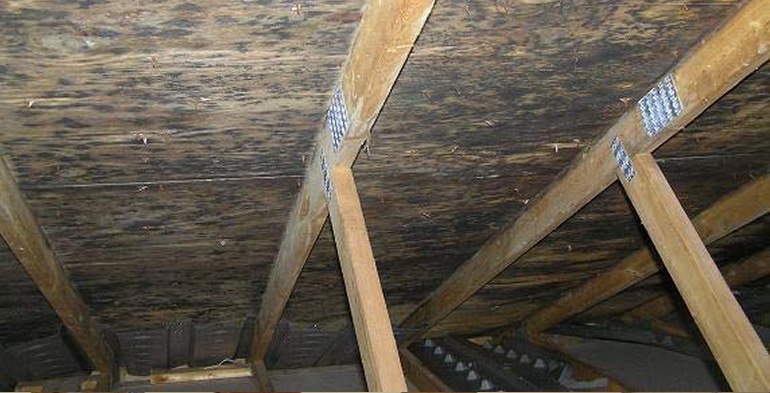
Step Five: Attic Inspection
Attics are a major focus during mold inspections in Brevard County.
Inspectors typically look for:
- Mold on roof decking or trusses
- Wet or compressed insulation
- Signs of roof leaks
- Poor ventilation or heat buildup
Because attics are hot and enclosed, mold can grow rapidly once moisture is present—even from small leaks.
Step Six: HVAC System Evaluation
HVAC systems play a big role in mold behavior.
During inspection, attention is given to:
- Air handlers and drain pans
- Condensation around components
- Ductwork and vents
- Airflow and humidity control
In Sharpes, HVAC systems run most of the year. Even minor condensation issues can support mold growth if not identified.
Step Seven: Bathrooms and Laundry Areas
Moisture-heavy rooms receive extra attention.
Inspectors check:
- Under sinks and behind toilets
- Around tubs and showers
- Washing machine connections
- Dryer vent areas
These rooms often contribute to mold growth when ventilation is inadequate or leaks go unnoticed.
Step Eight: Closets and Storage Spaces
Closets are frequently overlooked but commonly affected.
Inspection includes:
- Exterior wall closets
- Areas behind stored items
- Baseboards and corners
Limited airflow and trapped humidity make closets prime mold locations in Sharpes homes.
Step Nine: Crawl Spaces or Slab-Related Areas
Where applicable, crawl spaces are inspected for:
- Ground moisture
- Mold on framing
- Poor ventilation
In slab homes, inspectors focus instead on:
- Floor-level moisture
- Baseboard conditions
- Flooring transitions
Slab foundations behave differently than raised homes, especially after heavy rain.
Step Ten: Determining If Mold Testing Is Needed
Not every inspection requires testing.
Mold testing may be considered when:
- Mold is suspected but not visible
- Odors persist without clear growth
- Documentation is needed
- Multiple areas are involved
Testing is a tool—not the inspection itself. It’s most useful when paired with moisture findings.
Step Eleven: Understanding What Testing Can (and Can’t) Show
When used, testing may include:
- Air samples
- Surface samples
Testing helps compare indoor conditions to outdoor levels, but it doesn’t replace identifying moisture sources. Without moisture correction, test results alone don’t solve mold problems.
Step Twelve: Identifying the Root Cause
The most important outcome of a mold inspection is identifying why mold is present.
This often involves:
- Tracing moisture entry points
- Understanding humidity patterns
- Evaluating ventilation
- Reviewing past water events
Without addressing the root cause, mold problems almost always return.
Step Thirteen: Inspection Findings and Recommendations
After the inspection, findings are typically explained clearly.
This may include:
- Areas of concern
- Moisture sources identified
- Whether mold growth is likely active
- Practical next steps
A good inspection focuses on education, not alarm.
Why Local Experience Matters in Sharpes
Mold inspections are not one-size-fits-all.
Local experience matters because:
- Sharpes homes share common construction styles
- Slab foundations dominate the area
- Humidity patterns vary seasonally
- Storm behavior affects moisture intrusion
Many property owners rely on experienced local providers like Cocoa Mold Removal because understanding Brevard County conditions improves inspection accuracy.
Common Misconceptions About Mold Inspections
Some common misunderstandings include:
- “No visible mold means no problem”
- “Testing alone solves mold issues”
- “Mold inspections are only for severe cases”
In reality, inspections are most valuable before problems become severe.
When Property Owners Should Schedule an Inspection
Inspections are especially helpful after:
- Roof or plumbing leaks
- Storms or heavy rain
- Persistent odors
- Recurring mold
- Before buying or selling a home
Early inspections often prevent larger repairs later.
Mold Inspections and Property Value
Mold inspections play a role in protecting property value.
They help:
- Identify issues early
- Provide documentation
- Prevent surprise findings during sales
In Sharpes, inspections are often part of proactive home maintenance.
What a Mold Inspection Does Not Do
It’s important to understand what inspections don’t include.
A mold inspection does not:
- Automatically require remediation
- Involve tearing out walls unnecessarily
- Guarantee mold removal is needed
Inspections are about information and clarity.
A Practical Takeaway for Property Owners
The mold inspection process in Sharpes is designed to uncover hidden moisture conditions, not just visible mold. By combining visual assessment, moisture detection, attic and HVAC evaluation, and targeted testing when appropriate, inspections provide a clear picture of what’s happening inside a home.
Property owners who understand the inspection process are better prepared to make informed decisions, address issues early, and prevent recurring mold problems. In Sharpes and throughout the Cocoa area, a thorough mold inspection is one of the most effective tools for protecting indoor comfort, air quality, and long-term property value.