Mold in Beachside Properties in West Cocoa: What Cocoa Area Property Owners Should Know
Owning a beachside property near West Cocoa offers easy access to coastal living while still being close to central Brevard County conveniences. But homes located near Florida’s coast often face a challenge many owners don’t fully expect until it becomes visible: mold growth caused by ongoing humidity and moisture exposure.
Across West Cocoa, Cocoa, Cocoa Beach, Port St. John, Sharpes, and Canaveral Groves, mold inspections regularly uncover moisture problems in homes influenced by coastal air. In many situations, mold develops quietly behind walls, inside closets, or in poorly ventilated areas before property owners realize a problem exists.
Understanding why mold frequently affects beachside properties helps homeowners protect their homes, avoid recurring repairs, and maintain comfortable living conditions year-round.
Why Beachside Homes Face Greater Mold Risk
Mold spores are naturally present everywhere in Florida. Normally, these spores do not cause problems indoors. Mold growth begins only when spores encounter moisture and organic materials such as drywall, wood, or insulation.
Beachside homes experience higher moisture exposure because ocean air contains more humidity. Daily sea breezes carry moisture inland, and homes gradually absorb that moisture over time.
Several factors increase mold risk in coastal-influenced homes:
- High year-round humidity levels
- Salt-laden coastal air bringing moisture inland
- Frequent rainstorms and tropical weather
- Hurricanes and storm-driven rain
- Warm temperatures encouraging moisture buildup
- Homes left vacant for travel or seasonal use
- Air conditioning systems running most of the year
Even homes that have never flooded or experienced leaks can develop mold simply due to moisture accumulation from the environment.
How Moisture Builds Up Inside Coastal Homes
Humidity becomes problematic when indoor moisture cannot escape or dry out properly. Moisture often accumulates gradually in enclosed spaces, sometimes without obvious warning signs.
Moisture buildup commonly happens through:
- Condensation forming on cooler indoor surfaces
- Humid outdoor air entering through doors and windows
- Poor ventilation in enclosed rooms or closets
- Air conditioning systems struggling to control humidity
- Minor leaks remaining unnoticed
- Homes closed up tightly for long periods
When surfaces remain damp long enough, mold growth can begin quietly behind walls or inside materials.
Common Areas Mold Appears in Beachside Properties
Professional mold inspections across West Cocoa beachside properties frequently reveal mold growth in predictable areas affected by humidity.
Around Windows and Doors
Warm coastal air meeting cooler indoor surfaces often produces condensation around frames and sills, allowing mold growth to begin.
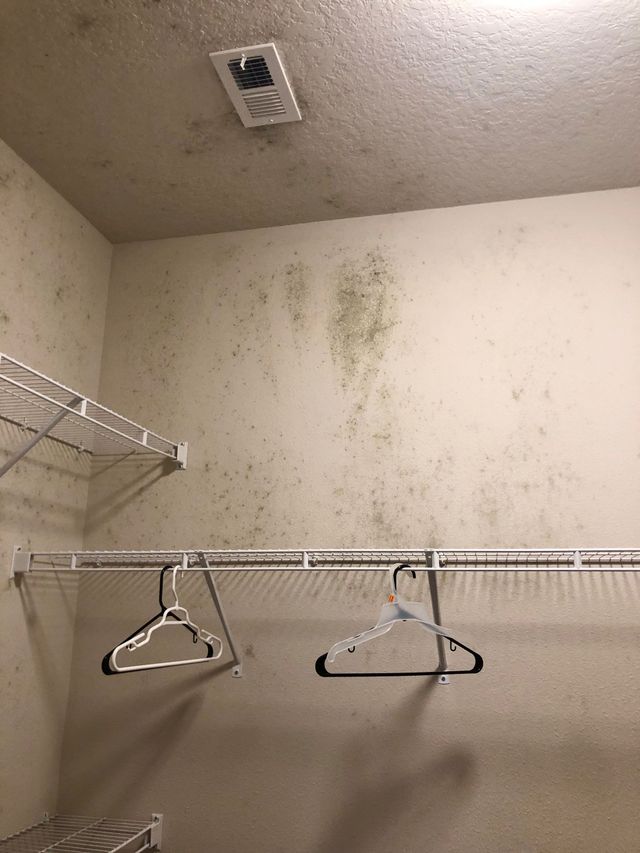
Closets and Storage Spaces
Closets frequently lack airflow, allowing moisture to accumulate, especially along exterior walls.
Bathrooms
Bathrooms generate steam daily, and without proper ventilation, humidity remains trapped.
Kitchens and Laundry Rooms
Appliances, sinks, and plumbing connections sometimes create small leaks or moisture buildup.
Exterior Walls and Ceilings
Humidity often accumulates where warm outdoor air meets cooler indoor surfaces.
Attics and Crawl Spaces
Poor ventilation sometimes allows moisture to collect above or below living spaces.
Because many of these areas are rarely checked, mold can grow unnoticed for extended periods.
Early Warning Signs Homeowners Should Notice
Humidity-related mold problems often produce warning signs before mold becomes widespread.
Common signs include:
- Musty or damp odors indoors
- Condensation forming on windows or glass doors
- Sticky or humid indoor air
- Peeling paint or bubbling drywall
- Mold appearing in closet corners
- Ceiling stains after storms
- Mold returning after cleaning
These symptoms usually indicate moisture is present somewhere inside the home.
Why Mold Develops Without Flooding or Major Leaks
Many property owners assume mold requires flooding or obvious water damage, but most mold problems in coastal homes develop slowly without dramatic events.
Common hidden moisture causes include:
- High indoor humidity
- Condensation buildup
- Small plumbing leaks
- AC condensation problems
- Poor airflow or ventilation
- Minor exterior moisture intrusion
Moisture often accumulates gradually, making problems harder to notice until mold becomes visible.
Why DIY Mold Cleanup Often Doesn’t Work
Homeowners sometimes try to remove mold themselves, only to see it return later.
Common DIY cleanup mistakes include:
- Cleaning visible mold without correcting humidity
- Using bleach on porous materials
- Painting over mold stains
- Masking odors temporarily
- Ignoring airflow or moisture sources
If moisture conditions remain unchanged, mold typically reappears quickly.
Correcting moisture conditions prevents recurrence.
How Professional Mold Inspection Helps Identify the Problem
Professional mold inspections help determine whether mold growth exists and what moisture conditions are causing it.
Typical inspections may include:
Visual Evaluation
Inspectors examine areas prone to moisture accumulation.
Moisture Detection Tools
Meters and thermal imaging cameras help locate hidden dampness behind walls or ceilings.
Air Sampling When Needed
Air samples sometimes confirm elevated mold spore levels indoors.
Surface Sampling if Necessary
Surface samples confirm mold presence when uncertain.
Professionals familiar with coastal Brevard County homes, including Cocoa Mold Removal, often recognize humidity patterns quickly because they encounter similar conditions regularly.
How Professional Remediation Protects Beachside Homes
Professional remediation addresses both mold contamination and the moisture allowing growth.
Typical remediation steps include:
- Containment of affected areas
- Removal of mold-damaged materials
- Cleaning and HEPA air filtration
- Correction of moisture sources
- Restoration of affected areas
Proper remediation reduces the likelihood of mold returning.
Preventing Mold in Beachside Properties
Preventing mold in coastal homes requires consistent moisture control.
Keep Air Conditioning Running
AC systems remove humidity from indoor air. Turning systems off during travel allows moisture to build quickly.
Use Dehumidifiers
Dehumidifiers help reduce indoor moisture levels during humid periods.
Maintain Indoor Humidity Below 60%
Humidity monitors help track indoor conditions.
Improve Ventilation
Bathroom and kitchen exhaust fans help remove moisture from daily activities.
Keep Airflow Moving
Avoid blocking vents and allow airflow into closets and storage spaces.
Inspect Homes After Storms
Small leaks sometimes appear after heavy storms and should be addressed quickly.
Maintain HVAC Systems
Annual maintenance ensures AC systems remove moisture effectively.
Check Window and Door Seals
Good seals reduce moisture intrusion.
Routine maintenance prevents many humidity-related mold problems.
Special Considerations for Seasonal or Part-Time Homes
Beachside homes sometimes remain empty for weeks or months when owners travel or rent properties seasonally.
During vacancy, owners should:
- Keep AC systems running
- Use humidity monitors
- Install smart thermostats
- Arrange periodic property checks
- Use dehumidifiers if needed
Vacant homes frequently develop mold when humidity control stops.
Why Mold Matters for Property Value
Beachside homes represent valuable investments, and mold problems can affect both comfort and resale value.
Potential impacts include:
- Buyer hesitation during sales
- Inspection concerns
- Rental guest complaints
- Repair expenses
- Structural material damage
Preventative care protects both enjoyment and long-term property value.
Why Coastal Homes Need Ongoing Attention
Humidity exposure never fully goes away near the coast. Mold prevention becomes an ongoing maintenance task rather than a one-time repair.
Routine inspections help catch moisture problems early before mold spreads.
Homes maintained consistently usually avoid large mold repairs.
Why Local Experience Matters
Homes across West Cocoa and nearby Cocoa-area communities face moisture conditions unique to Florida’s coastal climate. Professionals familiar with local construction styles often diagnose mold concerns faster than companies unfamiliar with the region.
Local experience helps ensure moisture sources are corrected rather than temporarily hidden.
A Calm Next Step for Property Owners
Living near Florida’s coast brings many benefits, but moisture management becomes part of responsible homeownership. Most mold problems can be prevented once humidity conditions are properly controlled.
If you notice musty odors, condensation, or recurring mold in your home, a professional inspection can help determine whether moisture conditions need correction.
Beachside homeowners in West Cocoa who stay proactive about moisture control typically keep their homes comfortable while protecting long-term property value.
Image Generation Prompts
1. Humid Florida coastal home exterior near beach environment, realistic residential setting, no people, no text, no logos.
2. Mold forming on interior wall near coastal window due to humidity buildup, realistic residential interior, no people, no text, no logos.
3. Mold growth inside closet of coastal home caused by trapped moisture, realistic residential environment, no people, no text, no logos.