DIY Mold Removal Risks in Brevard County: What Cocoa Area Property Owners Should Know
DIY mold removal might seem like a quick, affordable fix—but in Brevard County, it’s one of the most common ways property owners accidentally make mold problems worse. Florida’s heat, humidity, and frequent moisture events create conditions where mold grows fast, spreads easily, and hides well. When homeowners try to remove mold themselves without understanding the risks, the result is often greater contamination, higher costs, and potential health exposure.
For Cocoa area property owners, mold is rarely just a surface issue. It’s usually tied to moisture problems behind walls, under floors, or inside HVAC systems. This guide explains why DIY mold removal is risky in Brevard County, the most common mistakes people make, how those mistakes backfire, and when professional help is the safer, smarter option.
Why DIY Mold Removal Is Especially Risky in Brevard County
Florida’s environment changes the rules when it comes to mold.
Key local risk factors include:
- High year-round humidity
- Warm temperatures that accelerate mold growth
- Frequent storms and water intrusion
- Slab foundations that trap moisture
- Long air-conditioning seasons
- Homes built with porous materials
In Brevard County, mold doesn’t just sit on surfaces—it roots into materials and spreads into hidden spaces. DIY methods that might seem effective elsewhere often fail completely here.
The Biggest Myth: “If I Can See It, I Can Clean It”
One of the most dangerous assumptions property owners make is believing that visible mold is the entire problem.
In reality:
- Visible mold is often only 10–20% of the total growth
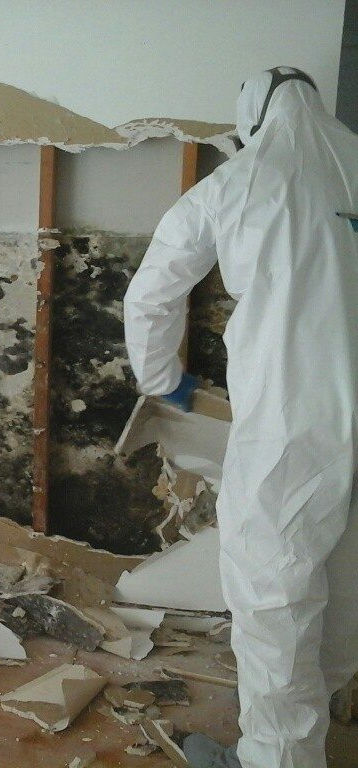
- Mold commonly spreads behind drywall, under flooring, and inside insulation
- Cleaning the surface does nothing to address hidden contamination
When you scrub visible mold without containment, you may actually release spores into the air, allowing mold to spread to new areas of the home.
How Mold Reacts to DIY Cleaning
Mold is not like dirt. When disturbed, it reacts in ways most homeowners don’t expect.
DIY cleaning can cause:
- Mold spores to become airborne
- Cross-contamination into other rooms
- Mold colonies to spread through HVAC systems
- Faster regrowth due to untreated moisture
In Brevard County’s humid air, airborne spores can quickly settle and grow elsewhere—often in places that were previously unaffected.
Health Risks of DIY Mold Removal
Health exposure is one of the most underestimated risks of DIY mold cleanup.
Common symptoms after DIY mold work include:
- Sneezing, coughing, and congestion
- Eye, nose, and throat irritation
- Headaches and fatigue
- Skin irritation
- Worsening asthma symptoms
Children, older adults, and individuals with allergies, asthma, or weakened immune systems are especially vulnerable.
Without proper personal protective equipment (PPE) and containment, DIY mold removal can significantly increase exposure.
Why Household Cleaners and Bleach Often Fail
Many DIY attempts rely on bleach or store-bought mold sprays. This is one of the biggest mistakes homeowners make.
Problems with bleach and common cleaners:
- Bleach does not penetrate porous materials like drywall or wood
- It may remove stains but not kill mold roots
- Moisture from cleaning can actually feed mold growth
- Mold often returns stronger than before
In Brevard County homes, bleach-based cleanup almost always leads to recurring mold.
Common DIY Mold Removal Mistakes
Scrubbing Without Containment
Scrubbing mold releases spores into the air, spreading contamination throughout the home.
Painting Over Mold
Paint hides stains but traps moisture—creating perfect conditions for mold to return.
Removing Materials Without Protection
Pulling drywall, baseboards, or flooring without containment spreads mold debris everywhere.
Ignoring the Moisture Source
Mold will always return if leaks, humidity, or condensation aren’t corrected.
Using Fans Incorrectly
Fans can blow mold spores into other rooms if containment is not in place.
DIY Mold Removal and Hidden Damage
One of the most expensive risks of DIY mold removal is missing hidden damage.
DIY efforts often fail to detect:
- Mold behind walls
- Mold under flooring
- Insulation contamination
- HVAC or duct mold
- Structural wood damage
By the time symptoms or odors return, damage is often far more extensive—and costly—than it was originally.
How DIY Mold Removal Can Increase Remediation Costs
Many homeowners try DIY cleanup to save money. Ironically, it often does the opposite.
DIY cleanup can:
- Spread mold into previously unaffected areas
- Increase the square footage requiring remediation
- Complicate professional cleanup later
- Increase demolition and repair costs
In Brevard County, professional remediation after failed DIY attempts is often significantly more expensive than early professional intervention.
DIY Mold Removal and Insurance Risks
DIY mold removal can also hurt insurance claims.
Insurance-related risks include:
- Destroying evidence of water damage
- Making it harder to prove timelines
- Insurers arguing the damage was mishandled
- Claims being denied due to improper mitigation
Many insurers expect professional mitigation once mold is suspected—especially after water damage.
Mold Types You Should Never Attempt to Remove Yourself
Some mold situations are especially dangerous for DIY attempts.
Avoid DIY removal when:
- Mold covers large areas
- Mold keeps returning
- Mold is behind walls or floors
- Mold is in HVAC systems or air ducts
- Mold follows flooding or storm damage
- Occupants experience health symptoms
These situations almost always require professional containment and remediation.
Why Professional Mold Remediation Is Different
Professional mold remediation is not just “better cleaning”—it’s a controlled process.
Professional services typically include:
- Moisture detection and source identification
- Proper containment to prevent spread
- HEPA air filtration
- Safe removal of contaminated materials
- Structural drying and humidity control
- Post-remediation verification
This approach stops mold at the source rather than chasing symptoms.

When DIY Mold Removal Might Be Acceptable (With Limits)
There are very limited situations where DIY action may be reasonable.
DIY may be acceptable when:
- Mold is very small (less than 10 sq. ft.)
- Mold is on non-porous surfaces
- There is no underlying moisture problem
- Proper PPE is used
- The area is isolated
Even then, ongoing monitoring is critical in Brevard County’s climate.
Warning Signs That DIY Mold Removal Has Failed
DIY cleanup has likely failed if you notice:
- Mold returning within weeks
- Persistent musty odors
- New mold in other rooms
- Worsening allergy or respiratory symptoms
- Increased indoor humidity
These signs indicate deeper contamination.
Mold and Air Quality After DIY Cleanup
One of the hidden dangers of DIY mold removal is long-term indoor air quality damage.
After improper cleanup:
- Mold spores may remain airborne
- HVAC systems may distribute contaminants
- Symptoms may persist without visible mold
This leads many homeowners to believe the problem is “mysterious” when it’s actually unresolved mold.
Preventing the Need for DIY Mold Removal
The best way to avoid DIY risks is to prevent mold in the first place.
Control Indoor Humidity
Keep indoor humidity between 30% and 50%.
Fix Leaks Immediately
Even small leaks should be addressed within 24 hours.
Inspect After Storms
Check roofs, windows, and interiors after heavy rain.
Maintain HVAC Systems
Clean drain lines and service systems regularly.
Monitor High-Risk Areas
Bathrooms, kitchens, under sinks, and HVAC areas need regular inspection.
DIY Mold Removal in Rental and Multi-Unit Properties
DIY cleanup is especially risky in rentals.
Risks include:
- Tenant health complaints
- Liability exposure
- Incomplete remediation
- Documentation issues
In rental properties, DIY mold removal often increases legal and financial risk.
Long-Term Consequences of DIY Mold Removal
The long-term costs of DIY mold removal can include:
- Repeated remediation expenses
- Structural repairs
- HVAC replacement
- Health-related complaints
- Reduced property value
What starts as a weekend project can become a long-term problem.
Final Thoughts for Cocoa Area Property Owners
DIY mold removal in Brevard County is far riskier than most property owners realize. Florida’s climate allows mold to grow fast, spread easily, and hide deeply—making surface-level cleanup ineffective and often dangerous.
While small, isolated mold spots may sometimes be manageable, most mold problems involve moisture, hidden growth, and air quality concerns that DIY methods simply can’t address. Attempting to handle these situations alone often leads to higher costs, greater contamination, and increased health risks.
For Cocoa area property owners, the safest and most cost-effective approach is understanding when mold is beyond DIY and acting early—before a small problem becomes a major one. In Florida, mold doesn’t reward shortcuts, and informed decisions are the strongest defense.