Mold in Attics in Cocoa Beach: What Cocoa Area Property Owners Should Know
Attic mold is one of the most common and most misunderstood mold problems affecting homes in Cocoa Beach. Many property owners never think to check their attic until a home inspection, renovation, or lingering odor raises questions. By that point, mold may have already been developing for months—or even years—completely out of sight.
In Cocoa Beach and across Brevard County, attic mold is rarely caused by a single leak or dramatic water event. Instead, it usually forms because of humidity, heat buildup, ventilation problems, and airflow patterns that are unique to Florida’s coastal environment. Even homes with newer roofs and no visible damage can develop significant attic mold under the right conditions.
This article explains why attic mold is so common in Cocoa Beach, how it develops, where it’s typically found, why it often goes unnoticed, and what Cocoa-area property owners should understand to address attic mold properly and prevent it from returning.
Why Attics Are Especially Vulnerable in Cocoa Beach
Attics in coastal Florida face extreme environmental stress.
Key local factors include:
- High year-round humidity
- Salt-laden coastal air holding moisture
- Intense attic heat buildup
- Long cooling seasons with constant AC use
- Moist indoor air rising into attic spaces
- Ventilation systems that struggle in humid climates
In Cocoa Beach, attics often experience hot, moist, stagnant air, which creates ideal conditions for mold growth on wood surfaces.
Attic Mold Often Has Nothing to Do With Roof Leaks
One of the biggest misconceptions is that attic mold means the roof is leaking.
In reality, most attic mold in Cocoa Beach is caused by:
- Humid indoor air leaking into the attic
- Poor attic ventilation
- Temperature differences between indoor air and attic surfaces
- Condensation forming on roof decking
- Moisture trapped near insulation
Many homes with perfectly intact roofs still develop attic mold.
How Moisture Gets Into the Attic
Moisture reaches attic spaces in several subtle ways.
Common sources include:
- Bathroom exhaust fans venting into the attic
- Gaps around attic hatches or recessed lights
- Unsealed ductwork
- Air leakage from living spaces below
- Warm, moist air rising naturally
Once moisture enters the attic, poor ventilation often prevents it from escaping.
Where Attic Mold Is Commonly Found
Attic mold usually forms on structural materials rather than insulation itself.
Roof Decking
Roof decking is the most common mold location.
Mold grows because:
- Warm, moist air contacts cooler wood
- Condensation forms on the underside of the roof
- Moisture lingers on wood surfaces
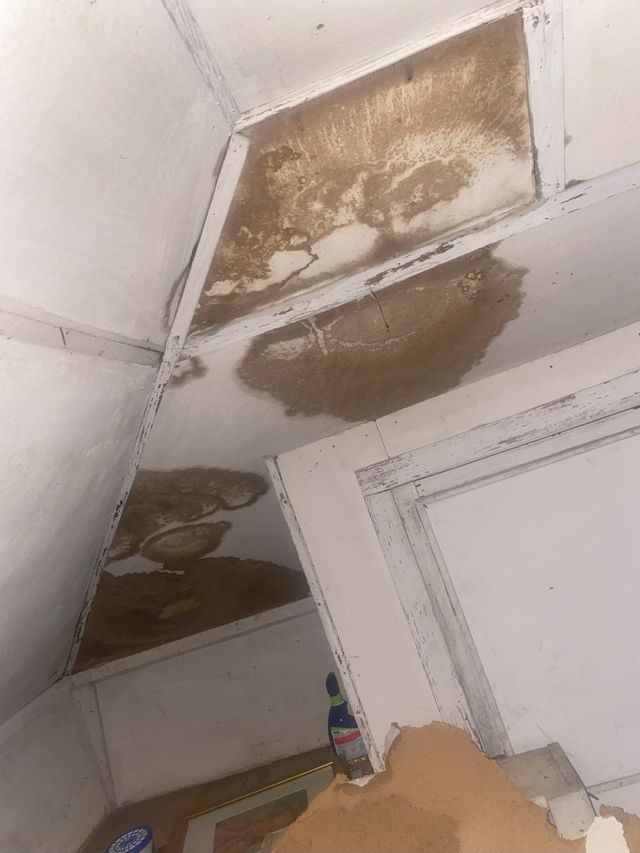
Dark staining or spotting on roof decking is often the first visible sign.
Trusses and Framing
Wood framing readily supports mold growth.
Mold may appear:
- Along truss chords
- On rafters
- Near roof intersections
Growth often follows airflow patterns rather than water paths.
Around Attic Vents
Vent areas are common trouble spots.
Mold may form:
- Near ridge vents
- Around soffit vents
- Where airflow is uneven
Improper vent design can actually trap moisture instead of removing it.
Near Bathroom Fan Ducts
Bathroom exhaust fans are a major contributor.
Mold often develops:
- Around fan duct terminations
- Where fans vent into the attic instead of outdoors
- Near disconnected or leaking ducts
Each shower sends moisture directly into the attic if fans aren’t properly vented.
Why Attic Mold Often Goes Undetected
Attic mold is frequently overlooked because:
- Attics are rarely entered
- Mold may not affect living spaces immediately
- Odors may be subtle or intermittent
- Growth stays confined to the attic for long periods
By the time attic mold is discovered, it’s often widespread.
Signs Attic Mold May Be Present
Even without attic access, there are warning signs.
Common indicators include:
- Musty odors after AC cycles
- Odors stronger during humid weather
- Mold recurring in upper-level rooms
- Excessive attic heat
- Poor indoor humidity control
These signs often point to attic-related moisture issues.
The Role of Ventilation in Attic Mold
Ventilation plays a critical role—but it’s often misunderstood.
Problems commonly include:
- Too little ventilation
- Poorly balanced intake and exhaust vents
- Blocked soffit vents
- Ventilation designs not suited for coastal humidity
In Cocoa Beach, ventilation must remove moisture, not just heat.
Attic Mold and HVAC Systems
HVAC systems interact directly with attic conditions.
Common HVAC-related issues include:
- Leaky ductwork releasing cool air
- Condensation on ducts
- Poor insulation around air handlers
- Pressure imbalances drawing moist air upward
These issues contribute significantly to attic mold development.
Why DIY Attic Mold Cleaning Is Risky
Attic mold cleanup is not a typical DIY project.
DIY attempts often fail because:
- Mold is widespread on structural wood
- Moisture sources aren’t identified
- Inadequate containment spreads spores
- Ventilation problems remain unchanged
Surface cleaning without correcting conditions leads to regrowth.
Attic Mold vs. Living-Space Mold
Attic mold behaves differently than mold in bathrooms or kitchens.
Key differences:
- Driven primarily by humidity and airflow
- Often spreads across large areas
- Tied to building design rather than spills
- Requires different prevention strategies
Treating attic mold like surface mold often leads to poor results.
How Attic Mold Is Properly Addressed
Effective attic mold resolution focuses on process and prevention.
Proper remediation typically includes:
- Evaluating ventilation and airflow
- Identifying moisture entry points
- Cleaning or treating affected wood surfaces
- Correcting exhaust fan venting
- Sealing air leaks from living spaces
- Stabilizing attic humidity
The goal is to make the attic an environment where mold cannot thrive.
Why Moisture Correction Matters More Than Cleaning
Cleaning attic mold without correcting moisture is temporary.
Without moisture correction:
- Mold almost always returns
- Growth may spread further
- Indoor conditions may worsen
Long-term success depends on controlling how air and moisture move through the home.
Why Local Experience Matters in Cocoa Beach Attics
Attic mold in Cocoa Beach behaves differently than in inland areas.
Local professionals understand:
- Coastal humidity patterns
- Salt air moisture retention
- Common attic designs in beachside homes
- How hurricanes and storms affect attic conditions
Many property owners rely on experienced local providers like Cocoa Mold Removal because attic solutions must be climate-specific to be effective.
Attic Mold and Property Value
Attic mold is often discovered during inspections.
It can affect:
- Buyer confidence
- Insurance reviews
- Repair negotiations
- Perceived maintenance quality
Addressing attic mold properly—and documenting the work—helps protect long-term property value.
Preventing Attic Mold in Cocoa Beach Homes
Prevention focuses on airflow and moisture control.
Helpful steps include:
- Ensuring bathroom fans vent outdoors
- Sealing attic access points
- Maintaining proper attic ventilation
- Monitoring attic humidity
- Inspecting attics periodically
In coastal Florida, attic prevention requires ongoing attention.
Monitoring After Attic Mold Is Addressed
Once attic mold is resolved, monitoring matters.
Property owners should:
- Recheck attics periodically
- Watch for returning odors
- Monitor indoor humidity
- Maintain exhaust fan use
Attic mold problems usually return gradually—early detection makes prevention easier.
A Practical Takeaway for Property Owners
Mold in attics in Cocoa Beach is extremely common—and rarely caused by roof leaks alone. It develops quietly from humidity, airflow issues, and moisture entering the attic from inside the home, often long before any visible signs appear indoors.
Property owners who focus on ventilation, air sealing, and moisture control are far more successful at resolving attic mold and keeping it from returning. In Cocoa Beach and throughout Brevard County, the attic is one of the most important—and most overlooked—spaces when it comes to long-term mold prevention.