Mold Remediation in Brevard County: What Cocoa Area Property Owners Should Know
Mold remediation is a topic many Brevard County property owners don’t think about until they’re forced to. It usually starts with a musty odor, discoloration that keeps coming back, or a space that never seems to feel completely dry. In Florida’s humid climate, mold rarely appears overnight—and it almost never develops without a moisture reason behind it.
Across Cocoa, Cocoa Beach, West Cocoa, Port St. John, Sharpes, and Canaveral Groves, mold remediation is not about panic or extreme measures. It’s about understanding why mold formed, how far it has spread, and what needs to be corrected so it doesn’t return. Simply wiping mold away or spraying a cleaner may improve how things look temporarily, but it doesn’t address the conditions that allowed mold to grow in the first place.
This article explains how mold remediation works in Brevard County, why mold problems are so common here, what proper remediation involves, and what Cocoa-area property owners should know before moving forward.
Why Mold Is So Common in Brevard County
Brevard County’s climate creates ideal conditions for mold growth nearly year-round.
Key factors include:
- High humidity most of the year
- Frequent rain and tropical weather
- Long cooling seasons with constant AC use
- Slab foundations common in local construction
- Slow indoor drying conditions
Because of these conditions, mold doesn’t require flooding or obvious leaks. Moisture can build quietly from condensation, humid air infiltration, or small water issues that never fully dry.
Mold Often Develops Without Obvious Water Damage
One of the biggest misconceptions is that mold always follows dramatic water events.
In reality, mold in Brevard County properties often develops due to:
- Indoor humidity staying elevated
- Condensation on cool walls, ceilings, or vents
- HVAC systems cooling air without removing enough moisture
- Minor plumbing or roof leaks
- Moisture trapped behind drywall, flooring, or cabinetry
These issues may leave little or no visible staining, which is why mold is often discovered weeks or months later.
When Mold Remediation Is Necessary
Mold remediation is typically needed when:
- Mold growth is visible and persistent
- Musty odors continue despite cleaning
- Mold keeps returning in the same area
- Porous building materials are affected
- Moisture problems have been ongoing
In Florida’s climate, delaying proper remediation often allows mold to spread into hidden areas, increasing both the scope and cost of the work later.
Common Areas Requiring Mold Remediation
Certain parts of Brevard County homes and buildings are especially vulnerable.
Attics
Attics are one of the most common mold locations.
Mold develops due to:
- Heat buildup
- Poor ventilation
- Humid air entering from living spaces
Attic mold often forms without roof leaks and spreads across roof decking and framing.
HVAC Systems and AC Closets
HVAC-related mold is extremely common in this region.
Problem areas include:
- Air handlers
- Drain pans and drain lines
- Duct insulation
- Supply and return vents
Because HVAC systems circulate air throughout the structure, mold here can affect multiple rooms.
Bathrooms
Bathrooms generate moisture daily.
Mold commonly appears:
- On ceilings
- Around exhaust fans
- On walls with inadequate ventilation
In Brevard County homes, moisture often lingers longer, increasing mold risk.
Kitchens and Laundry Areas
These spaces combine plumbing and humidity.
Mold may develop:
- Under sinks
- Behind cabinets
- Around dishwashers and washing machines
Small leaks often go unnoticed until mold appears.
Bedrooms and Closets
Bedrooms and closets are frequent mold locations.
Mold grows because:
- Doors stay closed
- Airflow is limited
- Exterior walls cool overnight
Closet mold is often discovered late.
Baseboards and Flooring
Slab-related moisture can affect lower walls and floors.
Mold may appear:
- Along baseboards
- Under flooring
- Behind lower drywall
This is often tied to moisture migrating upward from the slab.
What Mold Remediation Actually Involves
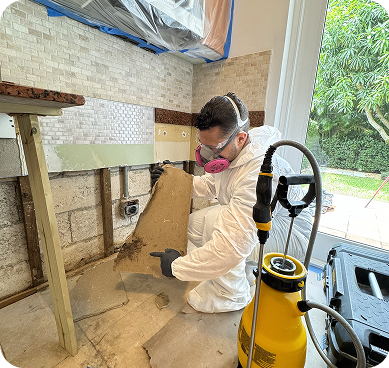
Proper mold remediation is a process, not a single step. It focuses on containment, removal, cleaning, and—most importantly—moisture correction.
Containment
Containment prevents mold spores from spreading during remediation.
This may include:
- Isolating affected areas
- Using physical barriers
- Controlling airflow
Containment is especially important when mold affects large areas or HVAC systems.
Removal of Mold-Contaminated Materials
Porous materials that support mold growth often need to be removed.
This may include:
- Drywall
- Insulation
- Ceiling materials
- Carpet padding
Non-porous materials are typically cleaned and treated rather than removed.
Cleaning and Treatment
After removal, remaining surfaces are:
- Thoroughly cleaned
- Treated to reduce residual contamination
- Prepared for drying and restoration
The goal is long-term stability—not cosmetic improvement.
Moisture Correction
This is the most critical part of mold remediation.
Effective remediation must address:
- Indoor humidity control
- Condensation sources
- HVAC performance
- Ventilation issues
- Leak or intrusion problems
Without correcting moisture conditions, mold is likely to return.
Drying and Stabilization
Affected areas are dried completely.
This includes:
- Monitoring moisture levels
- Ensuring proper airflow
- Verifying that materials no longer support mold growth
Why DIY Mold Cleanup Often Fails
DIY cleanup is tempting, but it frequently falls short in Brevard County homes.
DIY methods fail because:
- Only visible mold is removed
- Hidden growth remains untouched
- Moisture sources are not corrected
- Cleaning products don’t penetrate porous materials
In Florida’s climate, mold almost always returns if moisture remains.
Slab Foundations and Mold Remediation
Most Brevard County properties are built on slab foundations, which influence mold behavior.
Slabs can:
- Absorb moisture from saturated soil
- Release moisture slowly into indoor spaces
- Keep lower walls and flooring damp
Effective remediation often includes evaluating slab-related moisture near baseboards and flooring.
Mold Remediation vs. Mold Cleaning
Mold cleaning focuses on surface appearance.
Mold remediation focuses on:
- Eliminating contaminated materials
- Addressing hidden growth
- Correcting moisture conditions
Cleaning alone may temporarily improve appearance but does not resolve the underlying issue.
How Professional Mold Remediation Reduces Disruption
Properly planned remediation is often less disruptive than repeated DIY attempts.
Professional remediation:
- Targets affected areas only
- Uses containment to limit spread
- Can be scheduled strategically
This approach often reduces overall downtime and frustration.
Why Local Experience Matters in Brevard County
Mold remediation in Florida requires local knowledge.
Experienced professionals understand:
- Brevard County humidity cycles
- Seasonal condensation patterns
- Slab foundation moisture behavior
- Common construction styles in Cocoa-area communities
Many property owners work with experienced local providers like Cocoa Mold Removal because remediation decisions in Florida must be climate-specific to be effective.
Post-Remediation Monitoring and Prevention
After remediation, ongoing monitoring is essential.
Property owners should:
- Watch for recurring odors
- Monitor indoor humidity
- Maintain HVAC systems
- Inspect previously affected areas periodically
Successful remediation is measured over time—not immediately after cleanup.
Long-Term Mold Prevention After Remediation
Preventing mold after remediation protects your investment.
Helpful long-term strategies include:
- Keeping indoor humidity below 55%
- Running AC consistently
- Using bathroom and kitchen exhaust fans
- Improving airflow in closets and bedrooms
- Addressing small leaks promptly
Prevention reduces the chance of recurrence.
Documentation and Property Value
Proper remediation documentation helps:
- Track maintenance history
- Support future inspections
- Protect resale value
- Provide peace of mind
Clear records show responsible property ownership.
Why Local Conditions Matter So Much
Mold remediation strategies that work in dry climates often fail in Florida.
Brevard County properties face:
- Constant humidity pressure
- Frequent rain events
- Slow drying conditions
- Heavy reliance on air conditioning
Local experience ensures remediation addresses why mold formed—not just where it appeared.
A Practical Takeaway for Property Owners
Mold remediation in Brevard County isn’t about quick fixes or surface cleaning. Mold develops quietly from humidity, condensation, HVAC behavior, and hidden moisture—and remediation must address those conditions to be effective.
Property owners who approach remediation methodically, prioritize moisture correction, and plan for long-term prevention are far more successful at eliminating mold and keeping it from returning. In Cocoa and surrounding Brevard County communities, effective mold remediation protects comfort, property value, and long-term peace of mind.