Mold in Waterfront Homes in Port St. John: What Cocoa Area Property Owners Should Know
Living in a waterfront home in Port St. John comes with clear benefits—peaceful views, cooler breezes, and proximity to the water. But those same features also create one of the highest mold risk environments in Brevard County. Constant moisture in the air, higher humidity levels, and slower drying conditions make waterfront properties far more vulnerable to mold than inland homes.
Across Port St. John, Cocoa, Cocoa Beach, West Cocoa, Sharpes, and Canaveral Groves, waterfront homeowners often deal with mold that seems to appear without a clear cause. In many cases, the issue isn’t a leak or flood—it’s the environment itself. Understanding how mold behaves differently in waterfront homes helps property owners spot problems earlier and protect their homes long-term.
This article explains why mold is more common in waterfront homes in Port St. John, where it typically develops, how it differs from mold in inland homes, and what property owners should know to manage risk effectively.
Why Waterfront Homes Have Higher Mold Risk
Waterfront environments create constant moisture pressure on homes.
In Port St. John, waterfront homes are exposed to:
- Higher ambient humidity from nearby water
- Nighttime condensation from temperature changes
- Slower drying after rain
- Moisture-laden breezes entering the home
- Elevated ground moisture near foundations
Even when there are no visible leaks, these conditions can keep building materials just damp enough for mold to grow.
Humidity Never Really Drops Near the Water
One of the biggest differences between waterfront and inland homes is humidity consistency.
In waterfront areas:
- Humidity stays elevated day and night
- Evening temperatures drop faster near water
- Condensation forms more easily on cool surfaces
- Indoor humidity rebounds quickly when AC cycles off
In Port St. John waterfront homes, mold doesn’t need a water event—it often grows simply because surfaces never fully dry.
Condensation: The Silent Mold Trigger
Condensation is one of the most common mold triggers in waterfront homes.
It forms when:
- Cool indoor air meets warm, humid outdoor air
- AC runs heavily during the day and shuts off at night
- Windows, walls, and vents cool faster than the surrounding air
This moisture often goes unnoticed because it evaporates slowly and leaves no visible puddles—but it’s enough to feed mold growth over time.
Where Mold Commonly Appears in Waterfront Homes
Certain areas in waterfront homes are especially vulnerable.
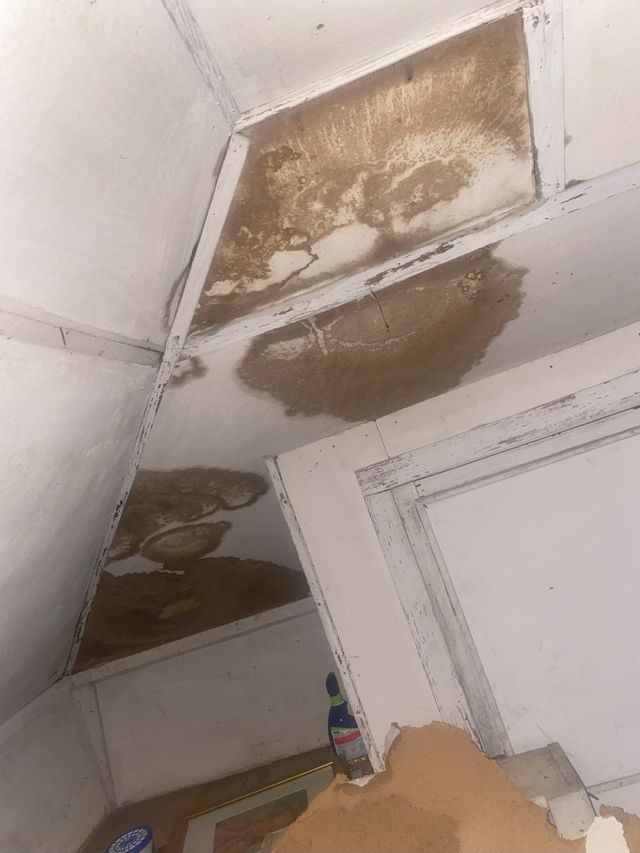
Attics
Attics in Port St. John waterfront homes often develop mold due to:
- Heat buildup during the day
- High humidity trapped overnight
- Limited ventilation
- Wind-driven moisture intrusion
Mold frequently appears on roof decking and trusses, even when no roof leak is present.
Exterior Walls
Walls facing the water experience higher moisture exposure.
Mold commonly forms:
- Behind drywall
- Along exterior corners
- Near windows and sliding doors
- Around poorly sealed penetrations
Because these walls cool faster at night, condensation forms more easily inside wall cavities.
Bedrooms
Bedrooms in waterfront homes often develop mold:
- Behind headboards
- Inside closets
- Along exterior-facing walls
Low nighttime activity and closed doors reduce airflow, allowing humidity to settle.
Closets
Closets are one of the most common problem areas.
Mold often grows:
- On back walls
- On stored clothing or linens
- In corners with little airflow
In waterfront homes, closets near exterior walls are especially vulnerable.
HVAC Systems and Vents
Air conditioning systems play a major role in waterfront mold issues.
Common problems include:
- Condensation near supply vents
- Moisture inside ductwork
- Drain line issues
- Air handlers located in closets or garages
Because waterfront homes rely heavily on AC, small HVAC moisture problems can affect the entire house.
Slab Foundations and Waterfront Moisture
Many Port St. John waterfront homes are built on slab foundations, which can amplify mold risk.
Slabs near water:
- Absorb moisture from the surrounding soil
- Release moisture upward slowly
- Keep lower walls and flooring damp
Mold often appears along baseboards or lower drywall where slab moisture combines with indoor humidity.
Why Mold Often Appears Without a Leak
One of the most confusing aspects for homeowners is when mold appears despite no visible water damage.
In waterfront homes, mold can grow because:
- Humidity alone keeps materials damp
- Condensation forms repeatedly
- Moisture migrates through building materials
- Nighttime cooling creates daily moisture cycles
This makes mold feel “mysterious,” when in reality it’s a predictable response to the environment.
How Storms Affect Waterfront Mold Growth
Storms increase mold risk in several ways—even without flooding.
After storms:
- Humidity spikes
- Wind-driven rain enters small gaps
- Power outages interrupt AC drying
- Materials stay damp longer
In waterfront areas, these effects are stronger and last longer than in inland locations.
Why Mold Grows Faster in Waterfront Homes
Mold grows faster in waterfront homes because:
- Drying time is extended
- Moisture cycles repeat daily
- Air stays saturated longer
- Nighttime condensation is common
Once mold begins growing, it often spreads quietly behind walls or under flooring before becoming visible.
Why DIY Cleaning Rarely Works Long-Term
Many waterfront homeowners try cleaning mold themselves, only to see it return.
DIY cleaning often fails because:
- It doesn’t address humidity
- Condensation continues
- Hidden mold remains
- Moisture sources aren’t corrected
In Port St. John waterfront homes, mold control requires managing the environment—not just cleaning surfaces.
How Mold Affects Waterfront Property Value
Mold concerns can affect:
- Buyer confidence
- Inspection outcomes
- Insurance evaluations
- Long-term maintenance costs
Because waterfront buyers often expect premium conditions, visible mold or persistent odors can have a greater impact on perceived value.
Why Professional Evaluation Matters for Waterfront Homes
Waterfront mold issues are complex and often subtle.
Professional evaluation helps:
- Identify condensation patterns
- Detect hidden moisture
- Assess HVAC-related issues
- Understand slab moisture behavior
- Recommend long-term solutions
Many waterfront property owners rely on experienced local providers like Cocoa Mold Removal because understanding coastal and waterfront moisture behavior requires Florida-specific experience.
Preventing Mold in Port St. John Waterfront Homes
Prevention is critical for waterfront properties.
Effective strategies include:
- Keeping indoor humidity below 55%
- Running AC consistently
- Using dehumidification when needed
- Improving attic ventilation
- Sealing exterior wall penetrations
- Maintaining HVAC drain systems
- Increasing airflow in closets and bedrooms
Waterfront homes benefit from proactive moisture management rather than reactive cleanup.
Managing Nighttime Condensation
Nighttime condensation is one of the biggest challenges.
Helpful steps include:
- Avoiding drastic thermostat changes at night
- Maintaining steady airflow
- Using ceiling fans to move air
- Monitoring humidity overnight
Small adjustments can significantly reduce moisture buildup.
Post-Storm Monitoring Is Essential
After storms, waterfront homeowners should:
- Inspect attics and exterior walls
- Check indoor humidity levels
- Look for musty odors
- Ensure AC systems are functioning properly
Early detection prevents small moisture issues from becoming major mold problems.
Long-Term Planning for Waterfront Homes
Waterfront mold prevention is ongoing.
Long-term planning may involve:
- Whole-home dehumidification
- Improved insulation
- Upgraded ventilation
- Periodic moisture inspections
These steps help homes perform better in a consistently damp environment.
Why Local Experience Makes a Difference
Mold in Port St. John waterfront homes behaves differently than mold in inland properties.
Local professionals understand:
- Water-adjacent humidity patterns
- Condensation cycles
- Slab and soil moisture behavior
- Storm-driven moisture intrusion
That local knowledge leads to more accurate diagnosis and longer-lasting solutions.
A Practical Takeaway for Property Owners
Waterfront living in Port St. John brings beauty—but also constant moisture challenges. Mold in these homes often develops without obvious leaks and is driven by humidity, condensation, and slow drying conditions.
Property owners who understand how mold behaves in waterfront environments—and who focus on moisture control rather than surface cleaning—are far more successful at preventing recurring issues. With proactive management and informed decisions, waterfront homes can remain comfortable, stable, and mold-resistant despite Florida’s demanding climate.