Mold Under Sinks in West Cocoa: What Cocoa Area Property Owners Should Know
Mold under sinks is one of the most common — and most underestimated — mold problems in West Cocoa homes. Because sink cabinets hide plumbing and block airflow, moisture issues can develop quietly and go unnoticed for months. By the time a musty odor or visible staining appears, mold growth may already be well established inside the cabinet and surrounding materials.
In West Cocoa and throughout Brevard County, mold under sinks is rarely caused by poor cleaning or neglect. It’s usually the result of slow plumbing leaks, condensation, or Florida’s high humidity combining with enclosed cabinet spaces. Understanding why this happens, where mold hides, and how it should be addressed helps property owners prevent repeat issues and unnecessary damage.
Why Mold Commonly Develops Under Sinks in West Cocoa Homes
Sink cabinets create the perfect environment for mold. Water supply lines, drain pipes, garbage disposals, and shutoff valves all run through a small enclosed space with limited airflow. Even a very slow drip can introduce enough moisture to support mold growth.
In West Cocoa, high humidity makes drying even more difficult. Moist air becomes trapped inside cabinets, especially when doors stay closed most of the time. Wood, particleboard, drywall, and cabinet backing absorb moisture easily and hold it for long periods.
Condensation is another common issue. Cold water pipes can sweat when warm, humid air contacts them. Over time, repeated condensation can keep cabinet interiors damp even when no active leak is present.
Common Plumbing Issues That Lead to Mold Under Sinks
Many under-sink mold problems start with plumbing issues that seem minor at first. Loose fittings, aging supply lines, or worn drain connections can drip slowly without creating visible puddles. These leaks often go unnoticed because they’re hidden behind stored items.
Garbage disposals are another frequent source. Improper seals, loose mounting rings, or worn gaskets can allow moisture to escape beneath the sink. Dishwashers connected to kitchen sinks can also contribute when drain hoses or supply lines leak intermittently.
In bathrooms, slow leaks from drain traps or shutoff valves are common culprits. Even small amounts of moisture can build up over time in the enclosed cabinet space.
Why Mold Under Sinks Is Common in West Cocoa and Brevard County
West Cocoa homes face the same moisture challenges found throughout Brevard County. High humidity is present most of the year, making it harder for damp materials to dry naturally.
Slab foundations, which are common in West Cocoa, often route plumbing through walls or floors in ways that make leaks harder to detect early. When leaks occur beneath sinks, moisture can spread into adjacent wall cavities or flooring without obvious signs.
Older homes may have aging plumbing materials more prone to leaks. Newer homes, while more energy efficient, can trap humidity inside cabinets if ventilation is limited. Both scenarios contribute to mold problems under sinks.
Signs Mold May Be Growing Under a Sink
Because under-sink mold is hidden, property owners often notice indirect signs first. A musty or earthy odor when opening the cabinet is one of the most common indicators.
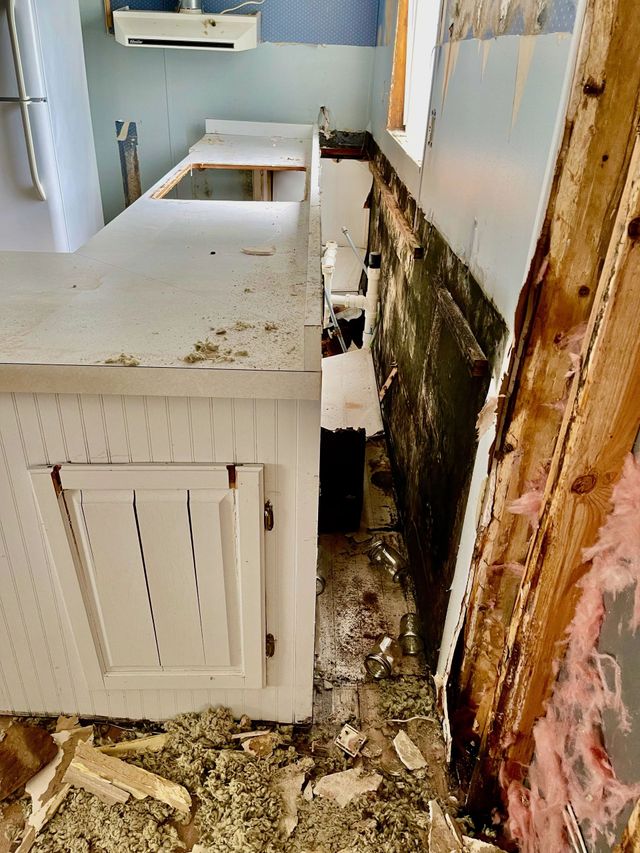
Visible discoloration on the cabinet floor, backing, or side panels can also appear. This may look like dark staining, fuzzy growth, or water marks. Warped cabinet bases, peeling finishes, or soft wood are additional warning signs.
Some homeowners notice persistent dampness under the sink, even when no active leak is visible. Items stored in the cabinet may feel moist or develop odors, signaling a moisture problem.
Hidden Areas Where Under-Sink Mold Spreads
Under-sink mold often extends beyond what’s immediately visible. Mold can grow on the underside of the cabinet base, behind the cabinet backing, or on drywall inside the wall cavity.
Moisture can also spread downward into subflooring beneath the cabinet. In severe cases, mold may develop under adjacent flooring materials such as tile, laminate, or vinyl.
Plumbing penetrations through walls and floors are another common hiding spot. These gaps allow moisture to enter wall cavities where mold can grow unnoticed.
Why Mold Under Sinks Often Goes Undetected
Under-sink areas are rarely inspected unless there’s a major leak. Cabinets are typically filled with cleaning supplies, storage bins, or household items that block visibility.
Slow leaks don’t always create puddles. Instead, moisture may evaporate gradually, leaving materials damp without obvious water accumulation. Florida’s humidity further masks the problem by slowing drying.
Because cabinets hide damage, mold can spread for long periods before being discovered. By the time visible signs appear, the issue may involve more than just the cabinet interior.
Why DIY Cleanup Often Doesn’t Solve Under-Sink Mold Problems
Many property owners attempt to clean mold under sinks using household cleaners. While this may remove visible growth temporarily, it rarely addresses the underlying cause.
Bleach and surface cleaners do not penetrate porous materials like particleboard, drywall, or wood. Mold inside these materials can continue growing even after surfaces look clean.
DIY cleanup also doesn’t identify slow leaks, condensation issues, or moisture trapped behind cabinets. Without fixing these problems, mold almost always returns.
In some cases, disturbing mold without containment can spread spores into nearby rooms or wall cavities.
How Mold Under Sinks Is Properly Evaluated
A proper evaluation starts with identifying the moisture source. Professional inspections focus on plumbing connections, pipe condition, condensation patterns, and surrounding materials.
Moisture detection tools are often used to locate damp cabinet materials, wall sections, or subflooring. This helps identify hidden damage without unnecessary demolition.
In some situations, air or surface samples may be collected to help confirm mold presence or assess indoor conditions. Testing is used selectively and interpreted alongside visual and moisture findings.
The goal is to determine how far mold has spread and why it developed in the first place.
Proper Mold Remediation for Under-Sink Areas
When mold under sinks goes beyond minor surface growth, proper remediation is required. This may involve removing damaged cabinet materials, drywall, or subflooring depending on severity.
Containment is used to prevent mold spores from spreading during removal. Once affected materials are removed, the area is thoroughly cleaned and dried.
Correcting the moisture source is critical. This may include repairing or replacing plumbing components, improving pipe insulation to reduce condensation, or sealing gaps where moisture enters wall cavities.
A proper remediation process focuses on prevention, not just cleanup. Local providers like Cocoa Mold Removal take this approach when addressing under-sink mold issues in West Cocoa and surrounding Brevard County communities.
Preventing Mold Under Sinks in West Cocoa Homes
Prevention starts with regular inspection. Cabinets under sinks should be checked periodically for moisture, stains, or odors. Plumbing connections should be inspected for slow leaks.
Reducing condensation helps as well. Insulating cold water pipes can minimize sweating in humid conditions. Keeping cabinet doors open occasionally allows trapped moisture to escape.
Any leaks, even small ones, should be repaired promptly. Damaged cabinet materials should be replaced rather than covered up, as they can continue holding moisture.
In homes with ongoing humidity issues, managing indoor moisture levels through proper AC operation or dehumidification can reduce the risk of under-sink mold.
Why Local West Cocoa Mold Experience Matters
Under-sink mold problems vary by region. Local experience matters because West Cocoa homes face specific challenges tied to Florida humidity, slab foundations, and plumbing layouts.
Professionals familiar with Brevard County understand how moisture behaves inside cabinets and wall systems in this climate. This knowledge allows for more accurate diagnosis and more effective long-term solutions.
Property owners in West Cocoa, Cocoa, Cocoa Beach, Port St. John, Sharpes, and Canaveral Groves benefit from working with professionals who regularly handle under-sink mold issues in similar homes and conditions.
A Practical, Calm Path Forward for Property Owners
Mold under sinks is easy to overlook but can cause ongoing damage if left unaddressed. In West Cocoa homes, it’s almost always a moisture issue rather than a cleaning problem.
Addressing leaks early, improving airflow, and seeking professional evaluation when signs persist can prevent small issues from becoming larger repairs. When mold is discovered, proper remediation provides clarity and long-term results.
For West Cocoa property owners, a knowledgeable local provider like Cocoa Mold Removal can help identify under-sink mold issues, correct the underlying causes, and restore cabinet areas to a dry, stable condition — protecting both the home and its long-term value.