Mold in Crawl Spaces in Brevard County: What Cocoa Area Property Owners Should Know
Crawl space mold is a widespread issue across Brevard County, yet it’s one of the least understood by property owners. Because crawl spaces are hidden beneath the home and rarely accessed, mold can develop there for long periods without being noticed. By the time odors, humidity issues, or indoor air concerns appear inside the home, the crawl space may already be heavily affected.
In areas like Cocoa, Cocoa Beach, West Cocoa, Port St. John, Sharpes, and Canaveral Groves, Florida’s climate plays a major role in crawl space moisture problems. High humidity, heavy rainfall, storm runoff, and poor ventilation all contribute. Understanding why crawl space mold develops, how it spreads, and how it’s properly addressed helps property owners protect their homes from long-term damage.
Why Crawl Spaces Are Vulnerable to Mold in Brevard County
Crawl spaces sit directly between the home and the ground, making them especially vulnerable to moisture. In Brevard County, warm temperatures and high humidity mean that crawl spaces rarely dry out naturally. Moist air enters through vents, foundation gaps, or soil evaporation and becomes trapped beneath the home.
During rainy seasons and storms, groundwater levels can rise, allowing moisture to seep into crawl spaces. Even without standing water, damp soil continuously releases moisture into the air. When that moisture contacts cooler surfaces like wood framing or insulation, condensation forms and mold can begin growing.
Limited airflow and low light create an ideal environment for mold to thrive unnoticed.
Common Causes of Crawl Space Mold
Several factors commonly contribute to crawl space mold in Brevard County homes. Poor drainage around the foundation is one of the most frequent. When rainwater isn’t directed away from the home, moisture collects beneath it.
Exposed soil is another major contributor. Without a proper vapor barrier, moisture evaporates directly from the ground into the crawl space air. Over time, this constant moisture exposure affects wood framing and insulation.
Plumbing leaks are also common. Slow leaks from pipes running through the crawl space may go undetected for months. HVAC ductwork can contribute as well, especially when condensation forms on ducts or when cool air leaks into a warm, humid crawl space.
Improperly vented crawl spaces can make the problem worse. Traditional venting often allows humid outdoor air to enter without providing a way for moisture to escape.
Why Crawl Space Mold Is Common Across Brevard County
Brevard County’s geography and climate make crawl space mold especially common. High outdoor humidity persists most of the year, limiting natural drying. Heavy rains and tropical storms can saturate the ground around homes, increasing moisture beneath them.
Homes in areas like Canaveral Groves or Sharpes may sit on larger lots with drainage challenges, while coastal areas like Cocoa Beach face wind-driven rain and moisture intrusion. Inland areas such as Cocoa and West Cocoa often deal with seasonal flooding or poor soil drainage.
Older homes may lack modern vapor barriers or drainage systems. Newer homes, while better sealed, can still trap moisture if crawl space design and ventilation aren’t properly balanced.
Signs Crawl Space Mold May Be Affecting the Home
Because crawl space mold is hidden, property owners often notice indirect signs first. A musty or earthy odor inside the home is one of the most common indicators. These odors may be stronger near floors or when the air conditioning system runs.
Some homeowners notice increased indoor humidity, uneven cooling, or floors that feel damp or cool to the touch. Wood floors may begin to warp or cup due to moisture rising from below.
In more advanced cases, mold spores from the crawl space can circulate into the living area, affecting indoor air quality even though the growth itself remains out of sight.
Common Areas Where Crawl Space Mold Grows
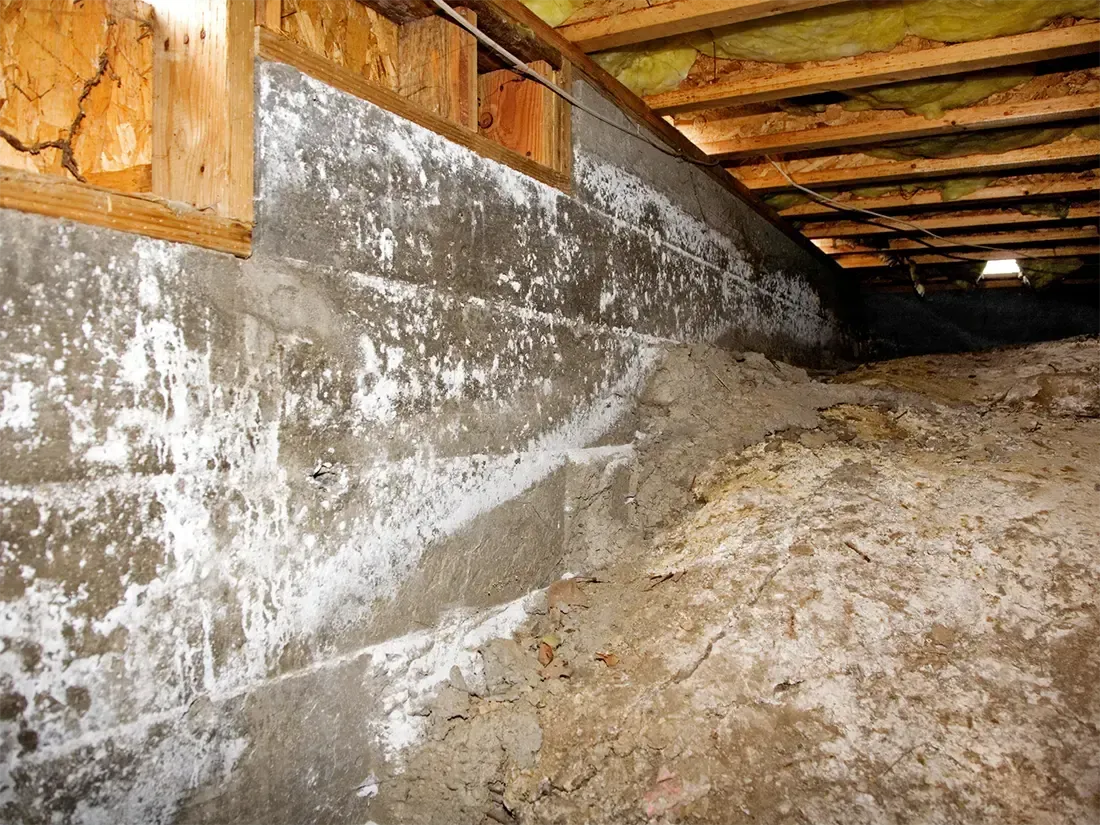
Crawl space mold most often develops on wooden floor joists, subflooring, and support beams. These materials absorb moisture easily and remain damp when humidity stays high.
Insulation is another frequent problem area. When insulation becomes damp, it loses effectiveness and can hold moisture against wood surfaces, accelerating mold growth.
Foundation walls and piers can also support mold growth, especially when moisture seeps in from surrounding soil. Around plumbing penetrations and HVAC ductwork, mold often develops due to condensation or leaks.
Why Crawl Space Mold Often Goes Undetected
Crawl spaces are rarely inspected unless there’s a specific reason. Many property owners don’t enter them at all, especially if access is limited or conditions are uncomfortable.
Mold growth in crawl spaces doesn’t usually cause immediate visible damage inside the home. Odors and humidity changes may be subtle at first and attributed to Florida weather rather than a hidden issue.
By the time signs become noticeable, mold may have spread across large areas of the crawl space.
Why DIY Crawl Space Mold Cleanup Is Ineffective
Some property owners attempt to address crawl space mold themselves. This often involves spraying visible mold or placing fans under the home. These efforts rarely solve the problem.
Surface cleaning does not address ongoing moisture from soil, drainage, or humidity. Without controlling moisture, mold quickly returns. Disturbing mold without containment can also release spores into the air, potentially spreading them into the home.
Crawl spaces can be hazardous environments due to poor air quality, limited access, and unstable surfaces. Proper remediation requires specialized equipment and techniques.
How Crawl Space Mold Is Properly Evaluated
Professional evaluation begins with a detailed crawl space inspection. This includes examining soil conditions, drainage, ventilation, wood framing, insulation, and plumbing.
Moisture detection tools are used to identify damp materials and areas where condensation occurs. Inspectors look for signs of long-term moisture exposure rather than just visible mold.
In some cases, air or surface samples may be collected to better understand mold conditions. Testing is used strategically and interpreted alongside visual and moisture findings.
The goal is to identify both the extent of mold growth and the conditions allowing it to persist.
Proper Mold Remediation for Crawl Spaces
Effective crawl space mold remediation focuses on removal and prevention. Containment is used to prevent mold spores from spreading during cleanup. Affected wood surfaces may be treated, and contaminated insulation is often removed and replaced.
Correcting moisture sources is the most critical step. This may involve installing a vapor barrier, improving drainage, sealing foundation openings, or addressing plumbing leaks.
In many cases, crawl space encapsulation or dehumidification is recommended to control long-term moisture levels. The goal is to create a dry, stable environment where mold cannot return.
Local providers like Cocoa Mold Removal take this prevention-focused approach when addressing crawl space mold issues throughout Brevard County.
Preventing Crawl Space Mold in Brevard County Homes
Prevention starts with moisture control. Proper drainage around the home directs rainwater away from the foundation. A quality vapor barrier prevents moisture from rising out of the soil.
Crawl space ventilation should be evaluated carefully. In many Florida homes, controlled environments with dehumidification perform better than open venting.
Plumbing and HVAC components should be inspected regularly for leaks or condensation. After heavy rain or storms, crawl spaces should be checked for signs of moisture intrusion.
Why Local Brevard County Experience Matters
Crawl space mold conditions vary by region. Local experience matters because Brevard County homes face specific challenges tied to humidity, soil conditions, storm patterns, and construction styles.
Professionals familiar with Cocoa, Cocoa Beach, West Cocoa, Port St. John, Sharpes, and Canaveral Groves understand how moisture behaves beneath homes in this area. This knowledge allows for more accurate diagnosis and more effective long-term solutions.
A Practical, Calm Path Forward for Property Owners
Crawl space mold can be easy to ignore, but it often affects the entire home over time. Addressing it early helps protect structural materials, improve indoor conditions, and prevent recurring moisture problems.
For Brevard County property owners, the key is recognizing that crawl space mold is a moisture issue first. Proper inspection and targeted remediation provide clarity and lasting results. A knowledgeable local provider like Cocoa Mold Removal can help guide the process with experience and a homeowner-first approach, ensuring crawl space mold is handled thoroughly and responsibly.